
Side Dishes
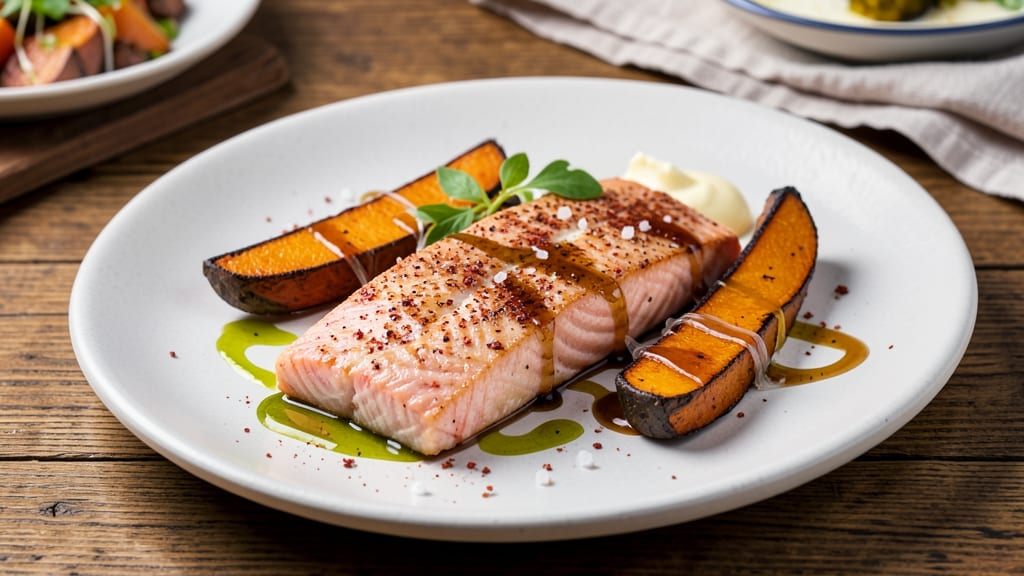
American Journey Salmon & Sweet Potato delivers restaurant-quality harmony in one elegant dish—juicy pan-seared salmon paired with caramelized, maple-glazed sweet potatoes. This recipe transforms weeknight dinners into a refined experience without requiring advanced techniques. The secret lies in balancing rich, buttery salmon with the natural sweetness of roasted sweet potatoes enhanced by a simple maple glaze.
The salmon achieves perfect tenderness through a gentle sear in high-quality oil, while the sweet potatoes develop a crisp exterior and creamy interior. A touch of smoked paprika and garlic in the salmon seasoning complements the warm spices in the sweet potatoes, creating a cohesive flavor profile.
This dish is designed to impress with minimal effort, making it ideal for both casual weeknights and special occasions.
What you'll end up with is a visually stunning plate featuring golden-brown salmon with flaky texture, alongside sweet potatoes that are perfectly caramelized with a glossy maple glaze. The combination of textures and flavors creates a satisfying balance—rich yet light, sweet yet savory.
This recipe serves two as an elegant main course or four as a side dish, scaling effortlessly to accommodate any gathering.
Pair with a crisp white wine or sparkling water with lemon for a refreshing contrast. The dish holds well at room temperature for up to two hours, making it perfect for meal prep or entertaining.
Ready to elevate your dinner table? Let's get started with this foolproof method that delivers professional results at home.
Ingredients for american journey salmon & sweet potato
Restaurant-quality harmony begins with these carefully selected premium ingredients for elegant salmon and sweet potatoes.
| Ingredient | Amount | Notes |
|---|---|---|
| Center-Cut Atlantic Salmon Fillets 🐟 | 2 whole | Skin-on, 6-8 oz each, even thickness |
| Medium Sweet Potatoes 🍠 | 2 whole | Organic preferred, uniform size |
| Pure Maple Syrup 🍯 | ¼ cup | Grade B for richer flavor |
| Unsalted European-Style Butter 🧈 | 4 tbsp | 85% fat content for best flavor |
| Extra-Virgin Olive Oil 🫒 | ½ cup | Light variety for high heat |
| Smoked Paprika 🌶️ | 1 tsp | High-quality Spanish variety |
| Ground Black Pepper 🌶️ | ½ tsp | Freshly cracked preferred |
| Kosher Salt 🧂 | 1 ½ tsp | Diamond Crystal preferred |
| Garlic Cloves 🧄 | 3 cloves | Freshly minced, peeled |
| Fresh Thyme Leaves 🌿 | ¼ cup | Finely chopped, stems removed |
| Cinnamon Sticks 🍃 | 1 whole | For sweet potato aroma |
| Lemon Zest 🍋 | 1 tbsp | From organic lemon |
| Fresh Lemon Juice 🍋 | 1 tbsp | For bright acidity |
| Ground Cinnamon 🍃 | ½ tsp | Ceylon preferred |
The salmon's quality is non-negotiable here—center-cut fillets with even thickness ensure perfect cooking. Whole Foods Market or specialty seafood purveyors like New England Fishmongers carry the best cuts. Look for vibrant color and firm texture; avoid any fillets with excessive bruising or discoloration. The sweet potatoes should be medium-sized for even roasting—organic varieties have richer flavor and thinner skins. For the maple syrup, Grade B is essential; it contains those beautiful flecks that add depth of flavor. Store your salmon in the coldest part of the fridge and use within 2 days for optimal texture.
No smoked paprika on hand? Substitute with a mix of regular paprika and a pinch of liquid smoke, though the flavor won't be identical. Fresh thyme unavailable? Dried thyme at one-third the amount works in a pinch, but fresh is superior. For the sweet potatoes, if you can't find organic, peel them thoroughly to remove any pesticide residue. The butter should be European-style with 85% fat content—it browns beautifully and adds richness. If you're concerned about dairy, vegan butter works equally well for the sweet potatoes. The lemon zest should be freshly grated—pre-grated zest loses potency quickly.
This dish reheats beautifully—simply warm in a 350°F oven for 10-12 minutes until heated through. The salmon and sweet potatoes can be prepared 2 days ahead and stored separately in airtight containers. For presentation, arrange the salmon on a platter with the sweet potatoes fanned around it, drizzling any pan juices over the top. The combination holds well at room temperature for up to 2 hours, making it perfect for entertaining. Store leftovers in the refrigerator for 3-4 days, though the flavors are best enjoyed fresh.
Why You'll Love This Recipe
- Sheet-Pan Simplicity: I swear by this recipe on nights when I’d rather not wash dishes—just toss the sweet potatoes in olive oil, roast them alongside the salmon, and let the maple syrup glaze do the work. No chopping, no fuss, and the pan’s done when the salmon flakes.
- Maple-Butter Magic: That rich, sticky glaze from the maple syrup and European butter? It turns the salmon into something restaurant-worthy without a single extra ingredient. The sweet potatoes caramelize just enough to balance the richness—like a dessert you didn’t realize you were eating.
- Weeknight to Weekend: Between us, this is my go-to for lazy Mondays and Sunday brunch. Serve it with a simple salad for a light dinner, or pile it high on toast for a brunch that feels special without the effort. Honestly, it’s the kind of dish that adapts to whatever I’m craving.
- Leftovers That Don’t Suck: Most salmon recipes turn into sad, dry fish the next day, but not this one. The maple glaze keeps it moist, and the roasted sweet potatoes hold up perfectly—great for lunchboxes or a quick reheat. (Yes, even on a Tuesday night.)
Step-by-step instructions for pan-seared salmon with maple-glazed sweet potatoes
This method delivers restaurant-quality results with perfectly seared salmon and caramelized sweet potatoes.
Prepare the Sweet Potatoes for Roasting
Preheat your oven to 400°F. Cut the 2 whole medium sweet potatoes lengthwise into ½-inch thick slices, creating 4 slices total. Arrange them on a parchment-lined baking sheet in a single layer, leaving ½-inch space between each slice for even browning.
In a small bowl, whisk together 0.5 cup extra-virgin olive oil, 1 tsp smoked paprika, 0.5 tsp ground black pepper, 1.5 tsp kosher salt, 0.5 tsp ground cinnamon, and 1 tbsp lemon zest. Brush this mixture generously over both sides of each sweet potato slice. Place the cinnamon stick on top of the sweet potatoes to infuse aroma during roasting.
Roast for 20-25 minutes until the edges are deep golden brown and the sweet potatoes are tender when pierced with a fork. Flip them halfway through for even cooking. Remove from oven and set aside while you prepare the salmon.
Create the Maple-Glaze and Sear the Salmon
In a small saucepan, combine 0.25 cup pure maple syrup, 1 tbsp fresh lemon juice, and 1 tbsp lemon zest. Bring to a gentle simmer over medium-low heat and reduce by half—about 5-7 minutes—until it reaches a thick, syrupy consistency. Remove from heat and set aside.
Pat the 2 center-cut Atlantic salmon fillets dry with paper towels, removing any excess moisture from the skin. Season both sides generously with 0.5 tsp kosher salt and 0.25 tsp ground black pepper. Let them sit at room temperature for 10 minutes to ensure even cooking.
Heat a large skillet over medium-high heat until very hot. Add 2 tbsp unsalted European-style butter and 1 tbsp extra-virgin olive oil. When the butter foams, carefully place the salmon fillets skin-side down in the pan. Cook undisturbed for 4-5 minutes until the skin is deep golden brown and crispy.
Finish the Salmon and Assemble
Using a fish spatula, carefully flip the salmon fillets and cook for another 3-4 minutes until the flesh is opaque throughout and flakes easily with a fork. The internal temperature should reach 145°F when measured at the thickest part. Remove the salmon from the pan and let it rest on a wire rack for 5 minutes.
Return the skillet to medium heat and add the remaining 2 tbsp butter. Stir in the 3 minced garlic cloves and 0.25 cup fresh thyme leaves, cooking for 30 seconds until fragrant. Pour the reduced maple glaze into the pan and simmer for 1 minute to combine flavors.
To serve, spoon the maple-thyme butter sauce over the salmon fillets and arrange alongside the roasted sweet potatoes. Garnish with additional lemon zest if desired. The sweet potatoes should be caramelized with crisp edges, while the salmon will have a perfect pink center and crispy skin.
Pro Tips For Making American Journey Salmon & Sweet Potato
- CUT SWEET POTATO LENGTHWISE: The recipe’s sweet potatoes often end up unevenly cooked because of their shape. Slice them lengthwise into ½-inch thick planks instead of rounds—this guarantees even browning and faster caramelization, especially when roasted with olive oil and butter.
- SALT THE SALMON FIRST: I used to skip this, but salting the fillets 30 minutes before cooking (lightly, just a pinch per side) makes a real difference. The seasoning penetrates better, and the skin crisps up properly when seared—no more bland edges.
- USE MAPLE SYRUP LAST: If you’re glazing the salmon with maple syrup, add it after the initial sear but before the final rest. The residual heat will turn it into a sticky, caramelized finish without burning it—just 2 minutes under the broiler does the trick.
- ROAST SWEET POTATOES AT 400°F: I learned this the hard way—lower heat (375°F) makes them steam instead of develop that golden crust. Hit 400°F for 25-30 minutes, flipping halfway, and they’ll be tender with crispy edges every time.
Essential equipment for this dish
Pan Essentials
For the salmon, I recommend a 10-inch cast-iron skillet like the Lodge Pre-Seasoned—it retains heat beautifully and creates that perfect crispy skin. If you don’t have cast iron, a stainless steel pan with a heavy base (like All-Clad Stainless) works just as well.
Avoid nonstick—it won’t brown the salmon properly. 🔥
Precision Tools
A meat thermometer is non-negotiable for salmon—aim for 145°F internal temperature. I use the ThermoWorks ThermoPop for its accuracy and ease of use. For the sweet potatoes, a sharp chef’s knife (like Wüsthof) ensures clean, even slices. A microplane for lemon zest maximizes flavor extraction.
Roasting Setup
Line your baking sheet with parchment paper for easy cleanup, but if you prefer metal pans, use half-sheet pans for even heat distribution. A wire cooling rack is essential for resting the salmon—it prevents soggy skin.
For the maple glaze, a small saucepan with sloped sides (like Le Creuset) helps reduce the syrup evenly.
Optional Upgrades
For extra crispiness, add 1 tbsp panko breadcrumbs to the sweet potato marinade. A fish spatula (like OXO Good Grips) makes flipping salmon effortless. For presentation, a small offset spatula helps arrange the sweet potatoes neatly on the plate. These tools elevate the dish without being essential.
Budget-Friendly Swaps
No cast-iron skillet? A well-seasoned stainless steel pan works fine. Skip the microplane—use a grater for lemon zest (though it’s less flavorful). For the thermometer, even a basic instant-read model (like Taylor Precision Products) does the job. Quality matters, but these swaps keep costs down without sacrificing results.
Nutrition facts
Frequently asked questions
Can I substitute regular potatoes for sweet potatoes in this recipe?
While you could technically use regular potatoes, the flavor and texture won't be the same. Sweet potatoes have a natural sweetness and creamier texture that pairs beautifully with the maple glaze. For a similar texture, try Yukon Gold potatoes, but they'll lack the sweetness and vibrant color. The recipe is designed to highlight the unique qualities of sweet potatoes.
How do I know when the salmon is fully cooked?
Use a meat thermometer to check the internal temperature at the thickest part—it should reach 145°F. The flesh should also appear opaque and flake easily with a fork. For visual confirmation, the skin should be deep golden brown and crispy, while the center remains slightly translucent pink. Never rely on color alone, as overcooking can make the salmon dry.
Can I make this dish ahead of time?
Prepare the sweet potatoes up to 2 days ahead and store them in an airtight container at room temperature. Cook the salmon just before serving—it reheats poorly. For the maple glaze, make it up to 3 days ahead and store in the refrigerator. Reheat the glaze gently in a small saucepan before using to restore its consistency.
What's the best way to reheat leftovers?
Reheat the salmon and sweet potatoes separately for best results. Warm the sweet potatoes in a 350°F oven for 10-12 minutes until heated through. For the salmon, heat it in a skillet over medium-low heat for 2-3 minutes per side with a little butter. Never microwave salmon—it makes the flesh rubbery. The maple glaze can be reheated in a small saucepan over low heat until warm.
Can I use frozen salmon instead of fresh?
Frozen salmon works, but it requires proper thawing first. Thaw it overnight in the refrigerator, then pat it completely dry before seasoning and cooking. Frozen salmon may release more water, which can prevent proper browning. For best results, use high-quality frozen salmon that's been previously frozen at sea and kept well-frozen.