
Soups & Stews
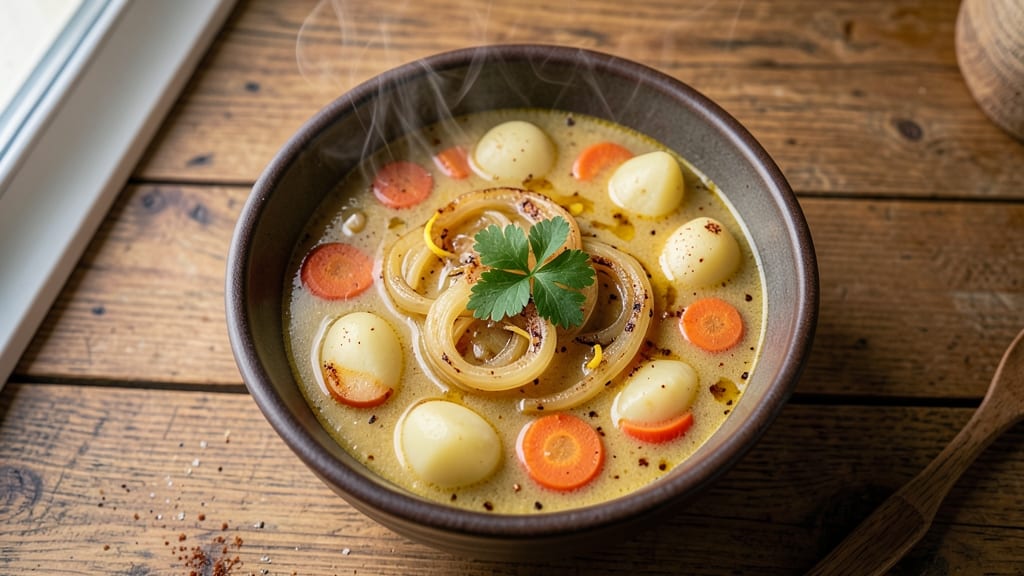
Austrian potato soup delivers the deep, savory warmth of Alpine kitchens in every hearty spoonful—where tender potatoes, caramelized onions, and smoky paprika create a broth so rich it feels like a hug. This traditional Erdäpfelsuppe transforms simple ingredients into a comforting masterpiece, perfect for chilly evenings or family gatherings. The secret lies in slow simmering, which develops layers of flavor that store-bought versions can't match.
What sets this recipe apart is its balance of earthy paprika, sweet carrots, and just enough acidity from a splash of vinegar to brighten the depth.
Unlike lighter soups, this one relies on a meaty broth foundation (though a vegetarian version works beautifully with mushrooms and vegetable stock) to create that signature Austrian richness. The potatoes soften just enough to absorb the flavors while maintaining their shape, ensuring each bite is both satisfying and elegant.
By the time you serve it—topped with crispy sausage, a dollop of sour cream, or fresh chives—you'll have a soup that feels like a celebration. It's the kind of dish that disappears quickly, leaving only empty bowls and requests for seconds.
The aroma alone will have everyone gathered around the table before the first spoonful is even taken.
Whether you're embracing Austrian tradition or simply craving a bowl of soul-warming comfort, this recipe delivers restaurant-quality results with minimal effort. The beauty of this soup lies in its versatility—serve it as a main course with crusty bread or as a starter to begin a hearty meal.
Here's how to make it.
Ingredients for austrian potato soup
These 15 ingredients transform into Austrian potato soup with rich, smoky depth.
| Ingredient | Amount | Notes |
|---|---|---|
| Yellow Onions 🧅 | 2 whole | Thinly sliced for caramelization |
| Carrots 🥕 | 4 medium | Peeled and sliced into rounds |
| Russet Potatoes 🥔 | 2 lb | Cut into 1-inch cubes |
| Paprika 🌶️ | 2 tbsp | Sweet or smoked for depth |
| Garlic Cloves 🧄 | 4 cloves | Minced for aromatic base |
| White Wine 🍷 | 1 cup | Dry variety preferred |
| Chicken Broth 💧 | 4 cups | Low-sodium for balance |
| Apple Cider Vinegar 🍎 | 1 tbsp | Brightens the broth |
| Bay Leaves 🌿 | 2 whole | For subtle earthiness |
| Fresh Thyme 🌿 | 1 tbsp | Leaves only, chopped |
| Salt 🧂 | 1 ½ tsp | Kosher or sea salt |
| Black Pepper 🌶️ | ½ tsp | Freshly ground |
| Butter 🧈 | 2 tbsp | Unsalted, for richness |
| Sour Cream 🥛 | ½ cup | For serving, optional |
| Fresh Chives 🌿 | ¼ cup | Chopped, for garnish |
The onions and carrots are the flavor anchors—look for vibrant, firm produce at the store. Trader Joe's or Whole Foods often carry the sweetest carrots, while the onions should have crisp edges. Paprika is non-negotiable here; Penzeys or McCormick smoked paprika adds that authentic Alpine warmth. The potatoes? Russets are ideal—they hold their shape while absorbing flavor. If you're short on time, pre-sliced onions work, but caramelizing them yourself makes all the difference.
No white wine? Substitute with extra broth and a splash of apple cider vinegar—the acidity keeps the balance. Fresh thyme is ideal, but dried works at one-third the amount. For a vegetarian version, swap the chicken broth for mushroom and vegetable stock. The butter adds richness, but olive oil works in a pinch. If you're topping with sausage, Italian or kielbasa pairs beautifully—just brown it separately before serving. The vinegar can be omitted if you prefer a sweeter soup, but it's what keeps this from being too heavy.
This soup tastes even better the next day as flavors meld. Store in an airtight container for 4-5 days in the fridge or freeze for 3 months. For meal prep, double the batch and portion into containers—sour cream and chives can be added fresh when serving. The broth reduces slightly when reheated, so add a splash of water or broth if it seems too thick. Leftovers reheat beautifully on the stove or in the microwave, making this a perfect make-ahead dish for busy weeks.
Why You'll Love This Recipe
- One-Pot Magic: I swear by this recipe because it’s actually one-pot—no chopping boards left in a mess, no extra pans to wash. Just toss in onions, carrots, and potatoes, let the paprika work its smoky charm, and boom. Done.
- Paprika Powerhouse: That dusting of paprika isn’t just for looks—it’s the secret weapon. Sweet and earthy, it turns simple potatoes into something rich and layered, like a hug in a bowl. (Yes, even on a Tuesday night.)
- Leftovers That Shine: Between us, this soup tastes better the next day. The flavors meld, the potatoes get tender, and it’s still hearty enough to pack for lunch. No sad, watery leftovers here—just pure satisfaction.
- Budget-Friendly Staples: Russets, carrots, onions—these are the ingredients I always have on hand. No fancy swaps, no last-minute grocery runs. It’s the kind of meal that lets you stretch your dollars without stretching your patience.
Step-by-step instructions for Austrian potato soup
This traditional recipe builds rich, paprika-infused flavor through careful layering and timing.
Develop the Aromatic Base
Melt the 2 tbsp butter in a large Dutch oven over medium heat. Add the 2 whole yellow onions, sliced thinly, and cook for 8-10 minutes until they become translucent and begin to caramelize at the edges. This slow cooking draws out their natural sweetness, which forms the foundation of the soup's depth.
Stir in the 4 medium carrots, sliced into rounds, and cook for another 5 minutes until they begin to soften. Here's where the magic starts—the caramelized onions and sweet carrots create a flavor base that carries through the entire dish. Don't rush this step; patience here prevents a flat-tasting soup later.
Build Depth with Wine and Spices
Add the 4 cloves garlic, minced, and cook for 30 seconds until fragrant. Immediately pour in the 1 cup white wine and let it simmer for 2-3 minutes until reduced by half. This reduction concentrates the wine's acidity, balancing the richness of the butter and potatoes to come.
Sprinkle in the 2 tbsp paprika and stir constantly for 1 minute to toast the spices—this releases their aromatic oils and prevents a raw, bitter taste. Add the 4 cups chicken broth, 1 tbsp apple cider vinegar, 2 whole bay leaves, and 1 tbsp fresh thyme. Bring to a gentle boil, then reduce heat to medium-low to maintain a steady simmer.
Cook the Potatoes Until Tender
Add the 2 lb russet potatoes, cut into 1-inch cubes, to the simmering broth. Season with 1.5 tsp salt and 0.5 tsp black pepper. Return to a gentle simmer and cook for 20-25 minutes until the potatoes are fork-tender but not falling apart. You'll know they're ready when a knife slides in easily with just slight resistance.
This cooking time ensures the potatoes absorb the rich, paprika-infused broth without turning mushy. If you notice the soup reducing too quickly, add ½ cup hot water to maintain the proper consistency. The goal is a velvety texture with distinct potato pieces that hold their shape.
Finish and Serve with Freshness
Remove the 2 whole bay leaves and discard them. Taste the soup and adjust seasoning if needed—this is your final opportunity to balance the flavors before serving. Ladle the hot soup into bowls, then swirl in 2 tbsp butter to add a final layer of richness.
Top each serving with 0.5 cup sour cream and 0.25 cup fresh chives, chopped. The sour cream adds a creamy contrast to the hearty broth, while the chives provide a bright, fresh finish. Serve immediately while the soup is hot, as the flavors meld best when enjoyed fresh from the pot.
Pro Tips For Making Austrian Potato Soup
- Sweat the Onions Slow: I used to rush this step, and the soup would taste raw and bitter. Instead, cook the onions over medium-low heat for 8-10 minutes until they’re translucent and just starting to caramelize—no need for oil, just their own moisture. This builds flavor that nothing else can.
- Dice Potatoes Evenly: Uneven pieces mean some potatoes turn to mush while others stay hard. Cut them into 1-inch chunks (peeled or unpeeled, your call) and soak them in cold water for 10 minutes first—this removes excess starch and keeps them firm. Drain well before adding to the pot.
- Bloom the Paprika: Skip this, and your soup will taste like dust. Toast the paprika (1-2 tablespoons) in the pot for 30 seconds after the onions, stirring constantly—it deepens the smoky flavor and cuts through the richness. Don’t walk away; it burns faster than you think.
- Simmer, Don’t Boil: After everything’s in the pot, keep the heat at a gentle simmer (tiny bubbles, occasional swirls). Boiling turns potatoes gluey and dulls the paprika’s punch. If it’s too thick, add broth; if too thin, let it reduce naturally—no shortcuts here.
Troubleshooting your austrian potato soup
Broth Too Thin?
If your soup ends up watery, don’t panic—simmering reduces the liquid naturally. For immediate fixes, mash ½ cup of the cooked potatoes directly in the pot to thicken the broth. If you prefer a smoother texture, blend 1 cup of the soup until smooth, then stir it back in.
For future batches, reduce the broth by ½ cup or add ¼ cup cornstarch mixed with 2 tbsp cold water as a slurry, stirring constantly until thickened. 💡
Potatoes Turning Mushy
Overcooking is the usual culprit here. To prevent this, cut your potatoes into even 1-inch cubes and use waxy potatoes like Yukon Golds if Russets are too starchy. Start checking for doneness at 18 minutes—they should be tender but still hold their shape.
If they’re already mushy, drain 1 cup of broth, mash the potatoes separately, then return them to the pot to reabsorb flavor. 🥔
Lacking Depth of Flavor
This often happens when skipping the aromatic base or rushing the wine reduction. For extra richness, add 1 tbsp tomato paste when sautéing onions or stir in 1 tsp soy sauce (trust me, it enhances umami).
If the paprika tastes bitter, it wasn’t toasted long enough—next time, cook it for 2 full minutes until fragrant. A splash of lemon juice at the end also brightens the broth. 🌶️
Sour Cream Curdling
Hot soup can turn sour cream grainy. To avoid this, stir in cold sour cream just before serving or place a dollop on top instead of mixing it in. For a smoother texture, blend the soup slightly before adding it.
If curdling happens, whisk in 1 tsp cornstarch to stabilize it. Pro tip: Use full-fat sour cream for the creamiest results. 🥛
Broth Too Salty
If your soup tastes overly salty, balance it with 1 tbsp apple cider vinegar or ½ cup unsalted broth. For a fresh start, strain the soup through a fine-mesh sieve, reserving the potatoes, then return them to the pot with 1 cup fresh broth.
If you’re in a pinch, add ½ cup cold milk or cream to dilute the saltiness while adding richness. 🧂
Preventing Skin Formation
Soups often develop a skin on top during simmering. To avoid this, skim off any foam that rises in the first 10 minutes of cooking. If a skin forms later, gently stir it into the pot or break it up with a wooden spoon.
For large batches, place a clean kitchen towel over the pot while simmering to minimize evaporation and skin formation. ❄️
Nutrition facts
Frequently asked questions
What makes this Austrian potato soup different from other potato soups?
Austrian potato soup stands out with its rich, smoky depth from paprika and caramelized onions, balanced by a splash of apple cider vinegar for brightness. Unlike creamy soups, this version keeps potatoes intact for texture, while the broth builds layers of flavor through slow simmering with herbs like thyme and bay leaves. The traditional touch of white wine reduction adds complexity most potato soups lack.
Can I make this soup vegetarian?
Swap the chicken broth for mushroom and vegetable stock, and skip the optional sausage topping. Use vegetable-based butter (like Earth Balance) and ensure your paprika is vegetarian-certified. The vinegar and herbs still deliver that signature Austrian tang—just add extra umami with a splash of soy sauce or a spoonful of nutritional yeast.
How do I store and reheat leftovers?
Store in an airtight container in the fridge for 4-5 days or freeze for 3 months. Reheat gently on the stove over medium-low heat, stirring occasionally, until warmed through. If too thick after reheating, add ½ cup hot water or broth to restore consistency. Add sour cream and chives fresh when serving to keep them vibrant.
What's the best potato variety for this recipe?
Russet potatoes are ideal—they hold their shape while absorbing flavor beautifully. For a creamier texture, use Yukon Golds instead. Avoid waxy varieties like red potatoes, as they turn mushy when simmered. If you must use reds, cut them slightly smaller (¾-inch cubes) and reduce cooking time by 3-5 minutes.
Can I make this soup in an Instant Pot?
Yes! Sauté onions and carrots on sauté mode for 5 minutes, then add garlic, wine, and spices. Pour in broth and vinegar, then cook potatoes on high pressure for 8 minutes. Quick-release pressure and stir in butter. The Instant Pot version finishes faster but may need extra broth to prevent thickening. For best results, use the manual setting instead of pressure cook.