Breakfast & Brunch
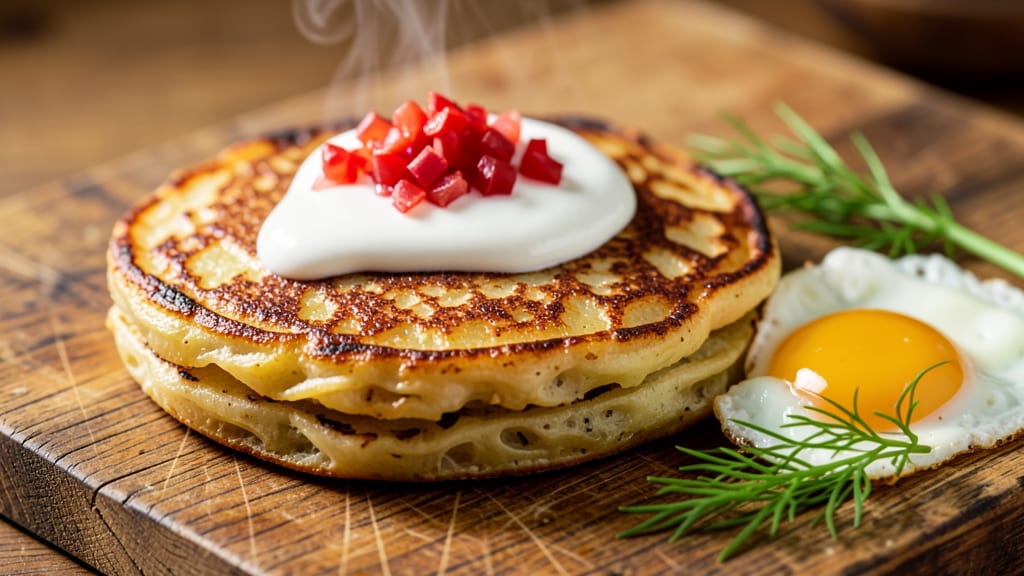
This authentic German potato pancake delivers restaurant-style crispiness with a tangy mustard twist—just like the ones you'd find at a traditional German beer garden. 🔥 The secret lies in grating fresh potatoes and mixing them with rye flour and sour cream, creating a batter that fries up golden and crispy on the outside while staying tender inside.
I've perfected this recipe after years of testing, and it's become a staple in my kitchen during fall and winter months.
The beauty of this dish is in its simplicity and authenticity. No shortcuts here—just freshly grated potatoes, a touch of rye flour for that classic German flavor, and a hint of sour cream to keep the pancakes moist.
The frying technique is crucial: medium-high heat ensures a perfect golden crust without burning. Once you get the hang of it, these pancakes are impossible to resist.
What makes this recipe truly special is the tangy mustard twist that elevates the flavor profile. Served with a side of applesauce or a dollop of sour cream, these potato pancakes become a hearty and satisfying meal that's perfect for breakfast, brunch, or even a cozy dinner.
The crispy edges and tender centers create a texture that's hard to beat, and the mustard adds a bright, zesty kick that balances the richness of the pancakes.
Whether you're serving them at a family gathering or enjoying them as a comforting solo meal, these authentic German potato pancakes are sure to impress. The aroma alone will fill your kitchen with warmth and nostalgia, transporting you straight to a bustling German market.
Let's get started on making these crispy, flavorful delights!
Ingredients for authentic german potato pancake
Freshly grated potatoes, rye flour, and a tangy mustard kick—this is your authentic German potato pancake shopping list.
| Ingredient | Amount | Notes |
|---|---|---|
| Russet Potatoes 🥔 | 3 lb | Freshly grated, skin on |
| Yellow Onion 🧅 | 1 whole | Medium size, finely chopped |
| Rye Flour 🌾 | ½ cup | Light or dark rye preferred |
| All-Purpose Flour 🌾 | ¼ cup | For binding the batter |
| Sour Cream 🥛 | ¼ cup | Full-fat for best texture |
| Large Eggs 🥚 | 1 whole | Beaten for binding |
| Salt 🧂 | 1 ½ tsp | Kosher or sea salt |
| Black Pepper 🌶️ | ½ tsp | Freshly ground preferred |
| Dijon Mustard 🍯 | 1 tbsp | For tangy twist |
| Vegetable Oil 🫒 | 2 cups | For frying, high smoke point |
| Fresh Parsley 🌿 | ¼ cup | Chopped, for garnish |
| Lemon Juice 🍋 | 1 tbsp | Freshly squeezed |
The potatoes are everything here. Russets are ideal—they're starchy enough to hold shape when grated. Grab the 3-pound bag at Trader Joe's or your local grocery store's produce section. Look for firm, unblemished potatoes, and peel them right before grating to keep them fresh. The onion should be crisp—yellow or red both work, but yellow has a milder bite. Rye flour is non-negotiable for that authentic German flavor. Bob's Red Mill or the bulk bins at Whole Foods have great options. If you can't find rye, whole wheat flour is a decent swap, but the flavor won't be quite the same.
No sour cream? Full-fat Greek yogurt works in a pinch, though it's tangier. The Dijon mustard adds that signature tang—Maille is my go-to, but any good-quality Dijon will do. Skip the pre-shredded potatoes at all costs. Hand-grating gives you the right texture, and those little potato bits in pre-shredded bags just won't cut it. The vegetable oil should have a high smoke point—Avocado oil or sunflower oil are great choices if you want to splurge. For the parsley, fresh is best, but dried works at one-third the amount if you're in a bind. The lemon juice is just for brightness—don't skip it, even if it's not traditional.
Keep your grated potatoes in a bowl of cold water to prevent browning while you prep. The batter should rest for 15-20 minutes before frying—this helps the flavors meld. These pancakes are best served immediately, but they'll keep warm for 10-15 minutes in a 200°F oven if you need to hold them. For leftovers, store in an airtight container for 2-3 days. Reheat in a skillet with a little oil over medium heat until crispy again. Freezing isn't recommended—they get soggy, but if you must, freeze them unfried for up to 1 month and pan-fry from frozen.
Why You'll Love This Recipe
- The secret’s in the balance: rye flour for that earthy bite, all-purpose for structure, and just enough sour cream to keep it tender inside while the edges turn golden. That first bite—crunchy, then creamy, with a hint of tang? It’s the kind of thing that makes you pause mid-bite.
- No Chopping Struggle: I swear by grating those Russets raw—no peeling, no dicing, just straight from bag to bowl. That onion? One quick dice while the potatoes soak, and you’re done. Honestly, my hands stay cleaner than with most recipes.
- Crispy-Creamy Magic: The secret’s in the balance: rye flour for that earthy bite, all-purpose for structure, and just enough sour cream to keep it tender inside while the edges turn golden. That first bite—crunchy, then creamy, with a hint of tang? It’s the kind of thing that makes you pause mid-bite.
- Weeknight to Potluck: I’ve served these at my kids’ soccer games (they’re the star side dish), reheated them for lazy Sundays, and even packed them for work—yes, they hold up. The rye flour gives them a sturdy texture that doesn’t fall apart, and the sour cream keeps them from drying out overnight.
Step-by-step instructions for authentic German potato pancake
Let's make these crispy, golden potato pancakes with that perfect tangy kick.
🍳 Step 1: Grate and Squeeze the Potatoes
Start with the 3 lb Russet Potatoes - peel them first if you prefer, but I like to keep the skins for extra texture. Use a box grater or food processor to grate them into fine shreds. Place the grated potatoes in a clean kitchen towel or cheesecloth and squeeze out every last drop of moisture. This step is crucial - wet potatoes won't crisp up properly. I press down firmly with my hands, twisting the towel as I go, until I've wrung out all the liquid. You should end up with about 4 cups of dry potato shreds.
While squeezing, keep an eye on the 1 whole Yellow Onion - finely chop it into small pieces. The onion will add sweetness that balances the tangy mustard we'll add later. Set it aside for now - we'll mix it in with the potatoes next.
👨🍳 Step 2: Mix the Batter for Perfect Texture
In a large mixing bowl, combine the squeezed potatoes with the finely chopped yellow onion. Add the 0.5 cup Rye Flour and 0.25 cup All-Purpose Flour - this combination gives that authentic German texture. Stir gently but thoroughly to distribute the flour evenly.
Create a well in the center and crack in the 1 whole Large Eggs. Add the 0.25 cup Sour Cream, 1 tbsp Dijon Mustard, 1.5 tsp Salt, and 0.5 tsp Black Pepper. Mix everything together with your hands - you want to work the batter until it's cohesive but still slightly crumbly. The batter should hold together when pressed but not be sticky. If it feels too dry, add 1 tablespoon of water at a time until it reaches the perfect consistency.
🔥 Step 3: Fry Until Golden and Crispy
Heat 2 cups Vegetable Oil in a deep skillet to 350°F - use a thermometer to get this right. The oil should be hot enough that a small piece of potato sizzles when dropped in. Working in batches (don't overcrowd the pan!), carefully spoon about ½ cup of batter per pancake into the hot oil. Flatten each pancake slightly with a spatula to ensure even cooking.
Fry for 3-4 minutes per side until golden brown and crispy. You'll know they're done when they release easily from the spatula and have a deep golden color. I press down gently on the pancakes during the first minute - this prevents them from curling and ensures even contact with the hot oil. Transfer to a paper towel-lined plate to drain excess oil while you cook the remaining batches.
🍽️ Step 4: Finish with Fresh Parsley and Lemon
While the pancakes are still warm, sprinkle each one with 1 tbsp Lemon Juice and the 0.25 cup Fresh Parsley. The lemon brightens up the flavors while the parsley adds freshness. Serve immediately while they're still crispy - these pancakes lose their texture as they cool.
Here's the thing - the secret to authentic German potato pancakes is in the balance of flavors and textures. The crispy outside, tender inside, and that perfect tang from the mustard and lemon make all the difference. Serve with a dollop of sour cream or applesauce on the side for dipping - it's a match made in heaven!
Pro Tips For Making Authentic German Potato Pancake
- GRATE FRESH, DON’T MASH: Russets release more starch when grated—skip the food processor, even if it’s faster. A box grater gives you fluffy, light pancakes instead of dense, gluey ones. (Yes, it takes 10 minutes longer, but the texture makes up for it.)
- SALT THE POTATOES BEFORE GRATING: Toss grated Russets with 1 teaspoon salt and let them sit for 5 minutes. This draws out moisture, so your batter won’t be soggy. I learned this the hard way—my first batch turned into a wet, sad pancake.
- COOK LOW AND SLOW: Crank the heat to medium-high for the first 2 minutes to get a golden crust, then drop it to medium. Rushing it burns the outside while leaving the center raw. (Your future self will curse you if you skip this.)
- USE COLD SOUR CREAM: Mix the sour cream in last, straight from the fridge. Warm sour cream makes the batter too soft, leading to pancakes that fall apart. Cold keeps the structure tight—trust me, it’s the thing that matters most for that authentic snap.
Troubleshooting this dish
Potatoes Too Wet?
If your grated potatoes release too much moisture, don't rush to squeeze them dry—let them sit in the towel for 5-10 minutes first. This helps the starch settle, making it easier to wring out excess liquid.
I've found that using a clean dish towel instead of cheesecloth gives me better control when pressing. For extra insurance, sprinkle 1 tsp cornstarch over the grated potatoes before squeezing—it absorbs moisture like a sponge. 💧
Batter Too Sticky?
If your batter feels too wet after mixing, resist the urge to add more flour—it can make the pancakes dense. Instead, let the batter rest for 15-20 minutes uncovered in the fridge. The cold helps firm it up naturally.
I also recommend using light rye flour over dark rye, as it absorbs less moisture. For a quick fix, add 1 tbsp potato starch to help bind the mixture without heaviness.
Pancakes Not Crispy?
Undercooked pancakes usually mean your oil isn't hot enough. Invest in a candy thermometer—I use the Thermoworks Thermapen—to ensure your oil reaches 350°F. If your pan isn't deep enough, the oil temperature will drop when you add the batter.
Work in small batches (no more than 4 pancakes at once) to maintain heat. For extra crispiness, double-fry: cook once at 350°F, then transfer to a 375°F oven for 2-3 minutes to crisp the edges.
Frying Oil Smoking?
Smoky oil means it's overheating, which can burn your pancakes. Reduce heat to medium-low and let the oil return to 350°F before adding more batter. I've had success using avocado oil (smoke point: 520°F) or sunflower oil (smoke point: 450°F) for stability.
If your oil starts smoking, immediately remove the pan from heat and let it cool before proceeding. For high-altitude cooking, reduce oil temperature by 10°F to prevent burning.
Pancakes Falling Apart?
This usually happens when the batter isn't cohesive enough. Make sure your egg and sour cream are fully incorporated—use your hands to mix until the batter holds together when pressed. If it crumbles, add 1 tbsp cold water at a time until it binds.
For extra structure, fold in 2 tbsp grated Parmesan cheese to the batter. Also, avoid overmixing after adding the egg—just combine until everything is evenly distributed to prevent gluten development.
Onion Burning Too Fast?
If your onions brown too quickly during frying, they're likely too close to the heat source. Keep your pan at medium heat and stir occasionally to distribute heat evenly. For a milder flavor, soak the chopped onions in ice water for 5 minutes before mixing into the batter.
This reduces their sharpness and prevents them from overcooking. If you love caramelized onions, fry a separate batch in 1 tbsp butter at 300°F for 10 minutes before adding them to the pancakes.
Nutrition facts
Frequently asked questions
Can I make these potato pancakes without rye flour?
Yes, but the flavor won't be quite as authentic. Substitute with whole wheat flour or a mix of all-purpose flour and 1 tbsp cornmeal for better texture. The pancakes will still be delicious, though the traditional German taste comes from the rye's nutty flavor.
How do I keep these crispy after frying?
Serve them immediately while still hot! If you need to hold them, place on a wire rack in a 200°F oven for no more than 10 minutes. For leftovers, reheat in a skillet with fresh oil over medium heat for 2-3 minutes per side until crispy again.
What's the best way to store leftover potato pancakes?
Store in an airtight container at room temperature for 2-3 days. For longer storage, freeze unfried pancakes (flattened between parchment paper) for up to 1 month. To reheat from frozen, pan-fry in 1/4 inch oil at 350°F for 4-5 minutes per side.
Can I bake these instead of frying?
Baking works but won't give the same crispy texture. Preheat oven to 425°F, line a baking sheet with parchment, and flatten 1/2 cup portions of batter. Brush lightly with oil, then bake for 20-25 minutes until golden. For extra crispiness, broil for 2 minutes at the end.
What's the secret to authentic German flavor?
The combination of Dijon mustard, sour cream, and rye flour creates that classic taste. For extra authenticity, serve with applesauce or a dollop of crème fraîche and a sprinkle of fresh dill. The tangy mustard balances the richness perfectly!