
Side Dishes
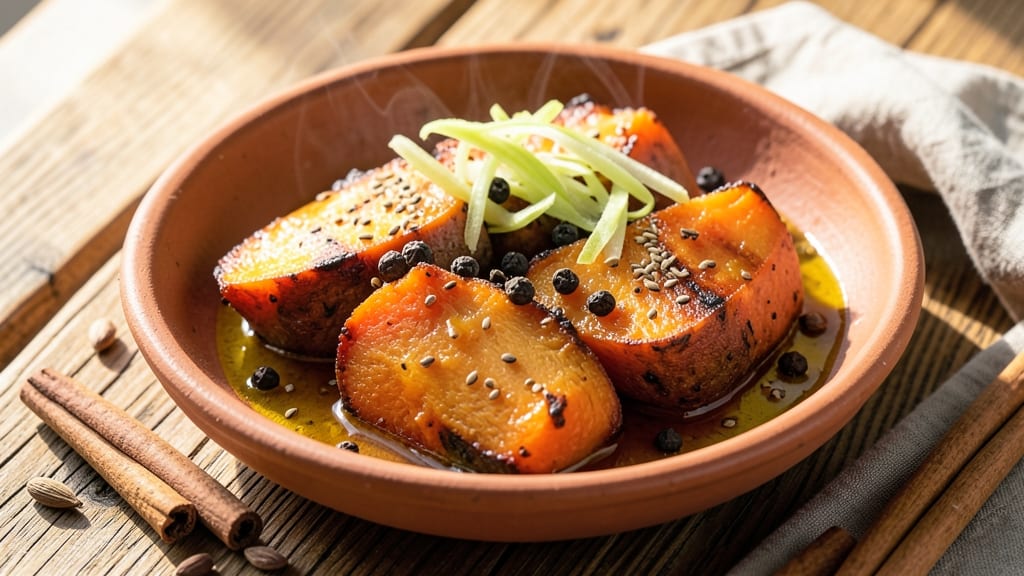
This Ayurvedic sweet potato recipe transforms humble orange roots into a golden, caramelized dish that warms the body and balances the doshas. Roasted with turmeric and cumin, it’s a staple in traditional Indian medicine for its earthy energy and digestive benefits.
The spices don’t just flavor—they work, creating a dish that’s both nourishing and deeply satisfying.
The secret lies in the slow caramelization, where sweet potatoes develop a rich, nutty depth while retaining their natural sweetness. A touch of ghee (or coconut oil for a vegan option) enhances absorption of the warming spices, making this more than a side—it’s a healing meal.
Perfect for autumn evenings or as a base for a light lunch, this recipe aligns with Ayurvedic principles of seasonal eating and spice balance.
What you’ll end up with is a tender yet firm sweet potato dish with crisp edges, infused with earthy cumin and golden turmeric. The aroma alone will invite you to the table, while the texture—creamy yet slightly resistant—mimics the ideal Ayurvedic bite.
Serve with steamed lentils or a simple kitchari for a complete, dosha-harmonizing plate.
This method is foolproof and adaptable: roast, stir-fry, or simmer into a curry. The spices can be adjusted to your constitution—add ginger for kapha types or black pepper for vata. Let’s bring Ayurvedic wisdom to your kitchen with this timeless recipe.
Ingredients for ayurvedic sweet potato
Eleven earthy ingredients transform sweet potatoes into a golden, caramelized Ayurvedic masterpiece.
| Ingredient | Amount | Notes |
|---|---|---|
| Organic Sweet Potatoes 🍠 | 2 lbs | Medium-sized, skin-on for texture |
| Clarified Ghee 🧈 | ½ cup | Or coconut oil for vegan option |
| Ground Turmeric 🌿 | 1 tbsp | Freshly ground preferred |
| Ground Cumin Seeds 🌿 | 1 ½ tsp | Toasted for deeper aroma |
| Fresh Ginger Root 🧅 | 1 inch | Peeled, grated finely |
| Black Peppercorns 🌶️ | ½ tsp | Freshly cracked for heat |
| Sea Salt 🧂 | 1 ½ tsp | Diamond Crystal preferred |
| Coconut Milk 🥥 | ¼ cup | Full-fat for creaminess |
| Asafoetida Powder 🌿 | ¼ tsp | Optional for Ayurvedic depth |
| Fresh Cilantro Leaves 🌿 | ¼ cup | Chopped for garnish |
| Lemon Juice 🍋 | 1 tbsp | Freshly squeezed |
The sweet potatoes are the foundation—organic, medium-sized with skins intact for texture and nutrient retention. Whole Foods or local organic markets carry the best quality, though any grocery store will do. For the spices, Penzeys or bulk bins offer the freshest turmeric and cumin, which lose potency quickly once opened. Toast your cumin seeds in a dry pan for 30 seconds before grinding to unlock deeper flavors—a small effort that makes a big difference. Fresh ginger and black pepper should be vibrant and aromatic; if they smell flat, replace them for optimal Ayurvedic benefits.
No clarified ghee? Coconut oil or avocado oil works beautifully for a vegan adaptation, though ghee enhances spice absorption. Asafoetida (hing) is optional but adds that signature Ayurvedic depth—substitute with 0.25 tsp garlic powder if unavailable. The coconut milk can be swapped for cashew cream for a richer texture. For those with kapha dosha, add an extra 0.5 tsp black pepper to balance, while vata types might prefer 0.25 tsp cardamom for warmth. Pre-grated ginger? Freshly grate your own—it makes all the difference in flavor and medicinal properties.
Store cooked sweet potatoes in an airtight container for 4-5 days in the fridge, where they develop even deeper flavors. For longer storage, freeze portions for up to 3 months—reheat gently in a dry pan to restore crisp edges. I always make a double batch: one portion for immediate use and the other portioned into containers for quick lunches. The dish reheats beautifully, though it's best enjoyed fresh when the spices are most aromatic. Garnish with fresh cilantro just before serving to preserve its bright flavor.
Why You'll Love This Recipe
- One-Pot Magic: I swear by this recipe when I’m too tired to wash another pan. Just slice those sweet potatoes, toss them in ghee with turmeric and cumin, and let the oven do the work—no flipping, no fuss. The only cleanup is wiping the same pan you cooked them in.
- Warm Spice Bomb: That first bite of caramelized sweet potato with the earthy kick of turmeric and the slow-burning heat of ginger? It’s like a hug for your taste buds. Honestly, I’ve tried store-bought versions, and this homemade spice blend is in a league of its own—deep, balanced, and impossible to resist.
- Leftover Hero: Between us, this dish begs to be made in bulk. The flavors actually get better as the spices meld overnight, and it reheats like a dream. I keep a batch in the fridge for lazy mornings or late-night cravings—no one ever turns it down.
- Budget Bright Spot: Sweet potatoes are my go-to cheap, nutritious staple, and pairing them with ghee (a little goes a long way) stretches every ingredient. Plus, turmeric and cumin are pantry workhorses that make this dish feel special without breaking the bank. It’s the kind of recipe that makes grocery day feel like a win.
Step-by-step instructions for Ayurvedic sweet potato preparation
Transform humble sweet potatoes into a vibrant, flavor-packed Ayurvedic dish with this method.
Prep and Parboil the Sweet Potatoes
Peel the 2 lbs of organic sweet potatoes and cut them into 1½-inch chunks, keeping the pieces uniform for even cooking. Place them in a large pot of boiling salted water—use about 1.5 tsp of sea salt—and cook for 8-10 minutes until they're fork-tender but still hold their shape. You'll know they're ready when a knife slides in easily but the center offers slight resistance.
Drain the sweet potatoes immediately and transfer them to a colander to stop the cooking process. The residual heat will continue to cook them slightly, so don't let them sit in hot water. This parboiling step is crucial—it ensures the sweet potatoes develop a creamy texture without turning mushy during the final caramelization.
Create the Ayurvedic Spice Paste
In a small bowl, combine the 1 tbsp of ground turmeric, 1.5 tsp of ground cumin seeds, 0.5 tsp of freshly cracked black peppercorns, and 0.25 tsp of asafoetida powder. Toast the cumin seeds in a dry skillet over medium heat for 30 seconds until fragrant, then grind them lightly with a mortar and pestle or coffee grinder to release their essential oils. This enhances their aromatic depth significantly.
Add the grated 1-inch fresh ginger root and mix well. The ginger should be finely grated—almost paste-like—to ensure even distribution. Set this spice blend aside; we'll incorporate it during the caramelization phase to maximize its flavor infusion into the sweet potatoes.
Caramelize with Ghee and Spices
Heat 0.5 cup of clarified ghee in a large, heavy-bottomed skillet over medium heat until it shimmers but doesn't smoke. Add the parboiled sweet potato chunks in a single layer, letting them sear undisturbed for 3-4 minutes until golden brown spots develop. This initial searing creates the foundational caramelization that gives the dish its signature color and depth.
Once the sweet potatoes develop color on one side, gently flip them and sprinkle half of the spice paste evenly over each piece. Cook for another 5-6 minutes, stirring occasionally, until the sweet potatoes are evenly caramelized and the spices begin to darken slightly. The ghee will bubble gently—this is normal and indicates the spices are releasing their oils.
Finish with Coconut Milk and Garnish
Pour in 0.25 cup of full-fat coconut milk and stir gently to coat the sweet potatoes evenly. The coconut milk should simmer for 3-4 minutes until it reduces slightly and creates a glossy, creamy sauce that clings to each piece. This step balances the earthy sweetness of the potatoes with a subtle richness that complements the Ayurvedic spices.
Remove the skillet from heat and stir in the 1 tbsp of freshly squeezed lemon juice. The acidity brightens the flavors and cuts through the richness of the ghee and coconut milk. Finally, sprinkle the 0.25 cup of chopped fresh cilantro leaves over the top, reserving some for garnish. The cilantro adds a fresh, herbal contrast that enhances the overall flavor profile.
Serve Warm with Perfect Texture
Transfer the sweet potatoes to a serving platter and let them rest for 2-3 minutes. This brief resting period allows the flavors to meld and the sauce to thicken slightly, ensuring each bite delivers a harmonious blend of textures and tastes. The sweet potatoes should be tender yet hold their shape, with a caramelized exterior and creamy interior.
Serve immediately while warm, garnished with additional cilantro leaves and a sprinkle of toasted cumin seeds. The dish should showcase vibrant golden hues from the turmeric and caramelization, with an aroma that combines earthy sweetness, warm spices, and citrus brightness. Each serving delivers a balanced meal that aligns with Ayurvedic principles of warmth and digestion support.
Pro Tips For Making Ayurvedic Sweet Potato
- CUT POTATOES EVENLY: Sweet potatoes split unevenly? Use a mandoline or sharp knife to slice them into ¼-inch rounds—no thicker, no thinner. I learned this the hard way when my first batch turned mushy in some spots and dry in others. A little extra effort here means consistent texture every time.
- HEAT THE GHEE RIGHT: Warm the clarified ghee over medium-low heat before adding spices—never high. Ghee burns faster than you’d think, and once it’s smoky, the whole dish takes on an off bitterness. Let it melt slowly, then add cumin and ginger while it’s just shimmering, not sizzling.
- PEEL GINGER LIKE A PRO: Skip the knife for ginger—use a spoon. Scoop out the fibrous center first, then grate the rest with the skin on for extra flavor. I used to peel it all, and the dish lost that deep, earthy punch. A spoon saves time and keeps the good stuff in.
- STEAM FIRST, SAUTE SECOND: Parboil the sweet potatoes for 3-4 minutes before frying in ghee. This guarantees they cook through without turning to mush. I was skeptical until I tried it—now I won’t skip it. The steam softens them just enough to caramelize perfectly in the ghee.
Creative variations of this recipe
Ayurvedic Curry Style
Transform this dish into a hearty curry by simmering the caramelized sweet potatoes with 1 cup coconut milk and ½ cup tomato purée until thickened. Add ½ tsp garam masala and ¼ tsp cinnamon for depth, then finish with 2 tbsp fresh cilantro.
Serve over steamed basmati rice or with naan for a complete meal. 🍛
Spiced Roasted Bites
For a quick snack, toss cubed sweet potatoes with 1 tbsp ghee, ½ tsp cumin, ¼ tsp turmeric, and ½ tsp salt. Roast at 400°F for 25 minutes until crispy.
Sprinkle with ½ tsp black pepper and 1 tbsp chopped cilantro before serving. These make perfect finger food for gatherings.
Sweet Potato Kitchari
Combine with 1 cup basmati rice and ½ cup mung dal for a complete Ayurvedic kitchari. Cook the rice and dal separately, then mix with the sweet potatoes and 1 cup coconut milk.
Add ½ tsp asafoetida and 1 tsp ghee for extra warmth. This balanced meal is ideal for detox or seasonal transitions.
Vegan Adaptation
Replace ghee with coconut oil and use cashew cream instead of coconut milk. Add ½ tsp nutritional yeast for a cheesy note. The dish maintains its earthy warmth while being fully plant-based. Perfect for vegans or those avoiding dairy. 🌱
Sweet-Savory Twist
Add 2 tbsp maple syrup or 1 tbsp jaggery during the final simmer for a subtle sweetness. Balance with ¼ tsp extra black pepper and ½ tsp cardamom. This variation works beautifully as a dessert-like side for savory mains.
Fermented Side Note
For an advanced technique, ferment the sweet potatoes overnight in 1 tsp apple cider vinegar and ½ tsp salt before cooking. This enhances probiotics and adds a tangy depth. Rinse well before proceeding with the recipe—ideal for gut health-focused meals.
Nutrition facts
Frequently asked questions
Can I use regular potatoes instead of sweet potatoes?
Sweet potatoes are essential for this Ayurvedic recipe—their natural sweetness and earthy flavor balance the spices perfectly. Regular potatoes would make the dish too starchy and less flavorful. If you must substitute, try orange-fleshed varieties like yams, but expect a slightly different texture.
How do I adjust the spices for my dosha type?
For kapha types, add an extra 0.25 tsp black pepper and 0.1 tsp ginger to increase warmth. Vata types should reduce black pepper slightly and add 0.1 tsp cardamom for grounding. Pitta types can keep the recipe as-is or add cooling 0.1 tsp coriander. Always taste before serving!
What's the best way to reheat leftovers?
Reheat in a dry skillet over medium-low heat with a splash of water for 3-4 minutes to restore crisp edges. Avoid microwaving—it makes the sweet potatoes soggy. For extra flavor, add a pat of ghee while reheating. Leftovers keep for 4-5 days in an airtight container.
Can I make this dish without ghee?
Yes! Use coconut oil or avocado oil for a vegan option. For best results, choose a high-smoke-point oil. The dish will still be delicious, though ghee enhances spice absorption and adds that signature Ayurvedic richness.
Why does my sweet potato turn mushy?
Overcooking during parboiling or caramelization causes mushiness. Start with 8-10 minutes of boiling (until fork-tender but firm) and reduce heat to medium-low when caramelizing. Keep pieces 1½-inch in size for even cooking. The secret is patience—let them cook slowly to develop texture!