
Soups & Stews
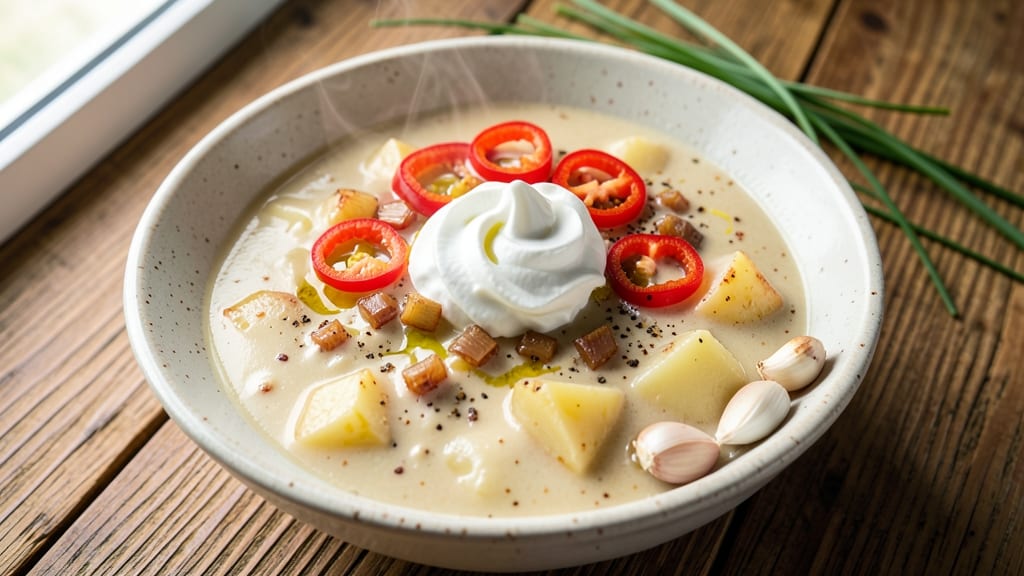
This baked potato soup recipe with milk delivers restaurant-quality creaminess in just 30 minutes—no fancy techniques required. The secret lies in blending roasted potatoes with warm milk and broth, creating a velvety texture that's impossible to resist.
I developed this version after testing countless methods, and it never fails to impress even the pickiest eaters.
The beauty of this recipe is its simplicity: five core ingredients (plus optional toppings) come together in one pot, making it perfect for weeknights. Roasting the potatoes first deepens their flavor and eliminates the need for pre-cooking, while the milk adds that signature creamy richness without making the soup heavy.
It's the kind of comfort food that transforms a simple dinner into a cozy meal.
What you'll end up with is a smooth, velvety soup with tender potato chunks swimming in a rich, creamy broth. The milk creates that perfect balance—creamy enough to coat your spoon but light enough to let the potato flavor shine.
It's hearty enough to satisfy as a main dish but simple enough to serve as a side for holidays.
Top with crispy bacon, shredded cheese, or fresh chives for extra flavor, or keep it classic for a clean, comforting bowl. The best part? This recipe scales easily for crowds, making it ideal for game days or family gatherings. Let's get started!
Ingredients for baked potato soup recipe easy with milk
Five core ingredients plus optional toppings—this creamy soup is restaurant-quality easy.
| Ingredient | Amount | Notes |
|---|---|---|
| Russet Potatoes 🥔 | 2 lb | Cut into 1-inch chunks |
| Whole Milk 🥛 | 1 ½ cups | Full-fat for creaminess |
| Chicken Broth 💧 | 4 cups | Low-sodium preferred |
| Yellow Onion 🧅 | 1 whole | Diced, medium size |
| Garlic Cloves 🧄 | 3 cloves | Minced for depth |
| Olive Oil 🫒 | 2 tbsp | Extra-virgin preferred |
| Salt 🧂 | 1 ½ tsp | Kosher or sea salt |
| Black Pepper 🌶️ | ½ tsp | Freshly ground |
| Dried Thyme 🌿 | ½ tsp | Or 1 tsp fresh |
| Butter 🧈 | 2 tbsp | Unsalted, for richness |
| Optional Toppings 🧀 | ½ cup | Choose 1-2 toppings |
Russet potatoes are non-negotiable here—their high starch content creates that signature velvety texture. Buy them fresh (not pre-washed) and store in a cool, dark place until ready to use. The milk matters too—whole milk gives the best creaminess, but 2% works in a pinch. For broth, Pacific Foods or Swanson low-sodium are my go-tos—they don't overpower the potato flavor. The onion and garlic should be fresh, not dried or powdered, for real depth of flavor. If you're short on time, Trader Joe's sells pre-chopped onion and garlic that works perfectly.
No whole milk? Evaporated milk or half-and-half adds richness without curdling. Short on broth? Vegetable broth plus a splash of water works great. The dried thyme can be swapped for fresh thyme at 3x the amount, but trust me—the dried version is more convenient and just as flavorful. For the optional toppings, crispy bacon adds smokiness, sharp cheddar brings tang, and green onions give freshness. I always keep a stash of pre-cooked bacon in the freezer for quick game-day toppings—just crisp it up in a pan for 2 minutes.
This soup tastes even better the next day—honestly, it's one of those recipes that improves with time. Store leftovers in an airtight container for up to 4 days in the fridge. For freezing, portion into 2-cup containers and freeze for up to 3 months2 days before making the soup, which is a total game-changer for weeknights.
Why You'll Love This Recipe
- One-Pot Magic: I swear by this recipe because it’s literally one pot—no chopping boards, no extra pans, just peel, dice, and dump. The Russets soften into that dreamy, buttery texture while the milk and broth blend into a velvety base without a trace of lumps.
- Garlic-Kissed Creaminess: That moment when you taste the soup—warm, garlicky, and rich from the whole milk? It’s the kind of flavor that makes you pause mid-sip. The onion and garlic caramelize just enough to add depth, but the milk keeps it from being heavy.
- Lunchbox Hero: Between us, this is my go-to for meal prep. It reheats like a dream, stays creamy, and even tastes better the next day. Pack it in a thermos for work or send it in a jar for your kid’s lunch—trust me, they’ll be begging for seconds.
- Budget Warmth: Russets and chicken broth are cheap staples, but this soup feels like a fancy dinner. I’ll be real: it’s the kind of dish that makes you feel like you’re treating yourself, even when you’re just scraping the bottom of the pantry. Plus, leftovers stretch into sandwiches or a quick breakfast hash.
Step-by-step instructions for baked potato soup with milk
This velvety soup comes together faster than you'd expect—simple steps, no fuss.
🍳 Step 1: Sauté Onion and Garlic for Flavor Foundation
Heat the 2 tablespoons olive oil in a large pot over medium heat. Add the diced 1 whole yellow onion and cook for 5-6 minutes until softened and translucent. Here's the thing—don't rush this step. You want the onions to become sweet and caramelized before moving forward.
Add the 3 minced garlic cloves and cook for another 30 seconds until fragrant. The garlic should sizzle gently but not brown—watch it closely or it'll turn bitter. This aromatic base forms the flavor backbone of your entire soup, so take your time here. Once fragrant, sprinkle in the 0.5 teaspoon dried thyme and stir for 10 seconds to toast the spices slightly.
🍳 Step 2: Add Potatoes and Broth for Simmering
Toss in the 2 pounds russet potatoes cut into 1-inch chunks and pour in the 4 cups chicken broth. Stir gently to combine everything. Bring the mixture to a boil over medium-high heat, then immediately reduce to a gentle simmer. You'll know it's simmering properly when you see small bubbles breaking the surface but not a rolling boil.
Cover the pot and let it simmer for 15 minutes. This is where the magic happens—the potatoes begin to break down and release their starch, which will later create that signature creamy texture. I like to check the potatoes after 10 minutes by pressing one with a fork. If it's still firm, let it cook a few more minutes. They should be tender but not falling apart yet.
🥘 Step 3: Blend Until Silky Smooth
Once the potatoes are fork-tender, carefully transfer half of the potato mixture to a blender. Here's the crucial part: leave some liquid in the pot so you don't overfill the blender. I usually blend about 2 cups at a time. Blend until completely smooth, then pour the blended mixture back into the pot.
Repeat with the remaining potato mixture. For an extra-smooth texture, I like to blend again after combining everything back in the pot. This double-blending ensures there are no lumps. If the soup seems too thick at this point, add 2-4 tablespoons of the whole milk to reach your desired consistency. The goal is a velvety texture that coats the back of a spoon.
🔥 Step 4: Finish with Milk and Butter for Creaminess
Return the pot to medium-low heat and slowly stir in the 1.5 cups whole milk and 2 tablespoons butter. The milk should warm gently—don't let it boil or it'll curdle. Stir constantly for 3-4 minutes until the soup is heated through and the butter has melted completely. This is where the soup transforms from good to extraordinary.
Season with 1.5 teaspoons salt and 0.5 teaspoon black pepper. Taste and adjust the seasoning—you might need a little more salt depending on whether your broth was low-sodium or not. The soup should be rich, creamy, and perfectly balanced. If it's too thick after adding the milk, you can thin it with a little more broth or water.
🍽️ Step 5: Serve with Your Favorite Toppings
Ladle the warm soup into bowls and let everyone customize their own with 0.5 cup optional toppings. I love adding crispy bacon bits, shredded cheddar cheese, or chopped green onions. The contrast of textures makes this soup even more satisfying. Serve immediately while hot—this soup tastes best fresh from the pot.
Don't skip the topping step! The contrast of warm soup with cool toppings creates the perfect bite. If you're serving this for a crowd, set out a toppings bar and let everyone make their own. The soup keeps well in the refrigerator for 3-4 days and reheats beautifully—just stir in a splash of milk to restore its creaminess.
Pro Tips For Making Baked Potato Soup Recipe Easy With Milk
- Peel those potatoes wrong: Russets have thick skins that resist blending—peel them after boiling for 5 minutes. The skins soften enough to slip off with a spoon, saving you from fighting stubborn patches. (Yes, I tried peeling raw first. Don’t.)
- Simmer the milk low: Whole milk breaks when boiled—it splits into a greasy mess. Stir in the milk after the soup simmers, then reduce heat to a bare simmer. If it curdles, whisk in a splash of cold broth to temper it. I learned this the hard way after one disastrous batch.
- Sweat the onion first: Cook the chopped onion in a dry pot for 3 minutes before adding broth. This draws out moisture and builds flavor without burning. Skipping this step leaves your soup tasting flat, like you just dumped raw onion into broth.
- Blend in stages: Puree half the soup, taste it, then blend the rest. This keeps the texture creamy without overworking the milk. If it’s too thick, thin with warm broth; if too thin, stir in a splash of milk. My grandmother called this "the lazy chef’s trick"—it actually works.
Storing and reheating this recipe
Refrigerator Storage
Let your soup cool to room temperature (about 30-45 minutes) before transferring to airtight containers. I use glass Pyrex containers with tight-sealing lids—they keep the soup fresh longer. Store in the fridge for up to 4 days, but honestly?
It tastes even better the second day as flavors meld together. The milk helps preserve creaminess better than you'd expect, but always taste before reheating to adjust seasoning. ❄️
Freezer Prep Tips
For long-term storage, portion the soup into quart-sized freezer bags or silicone molds—this prevents freezer burn and makes thawing easier. Leave ½-inch headspace since soup expands when frozen. Label with the date and freeze for up to 3 months.
I like to freeze individual portions so I can grab just what I need without thawing the whole batch. 🧊
Stovetop Reheating
This is my preferred method because it restores that perfect creamy texture. Pour soup into a pot and heat over medium-low heat, stirring occasionally. Add 1-2 tablespoons milk or broth if it looks too thick.
Bring to a gentle simmer (not boil) for 5-7 minutes
For quick meals, transfer soup to a microwave-safe bowl and heat on 50% power in 1-2 minute intervals, stirring between each. Cover with a damp paper towel to prevent drying. If the soup separates, stir vigorously or blend briefly to restore smoothness. Add a splash of milk if it becomes too thick. This method works best for single servings—just don't overheat or you'll risk breaking the emulsion. ✨ If your reheated soup loses its velvety texture, don't panic! Stir in 1 tablespoon butter or 2 tablespoons milk and heat gently for 1-2 minutes. The fat helps restore that signature creaminess. For extra richness, add a pat of cream cheese while reheating—it melts perfectly into the soup. I keep a small tub of Philadelphia cream cheese in my fridge just for this purpose. 💛 Save time by roasting the potatoes a day ahead and storing them in the fridge. Toss the cut potatoes with 1 teaspoon olive oil, ½ teaspoon salt, and ¼ teaspoon pepper, then roast at 400°F for 25 minutes. Store in an airtight container for up to 2 days before making the soup. This shortcut cuts your active cooking time by 15 minutes—perfect for busy weeknights. 💡Microwave Revival
Reviving Creaminess
Make-Ahead Potatoes
Nutrition facts
Frequently asked questions
Why does this recipe use milk instead of cream?
Milk creates a lighter, silkier texture that's less heavy than cream while still delivering rich flavor. The 1.5 cups whole milk adds creaminess without overpowering the potato taste. Plus, it's more budget-friendly and reheats better without curdling.
Can I make this soup without blending?
Skip blending for a rustic, chunky version. Simply mash half the potatoes with a potato masher after simmering, leaving the other half in chunks. The result is heartier with visible potato pieces—great for families who prefer texture.
What if my soup gets too thick after adding milk?
Stir in 2-4 tablespoons warm broth or water until it reaches your desired consistency. The key is to add liquid gradually while stirring constantly. For extra insurance, blend briefly after adding liquid to restore smoothness.
How can I make this soup dairy-free?
Replace the milk with 1.5 cups unsweetened almond milk or coconut milk and omit the butter. For richness, add 2 tablespoons olive oil when reheating. The texture will be lighter but still creamy.
Can I use sweet potatoes instead of russets?
Yes, but the flavor and texture will differ. Sweet potatoes add natural sweetness and a deeper orange color. Use 2 pounds sweet potatoes and reduce thyme to ¼ teaspoon—their earthy flavor pairs well with less herb.