
Side Dishes
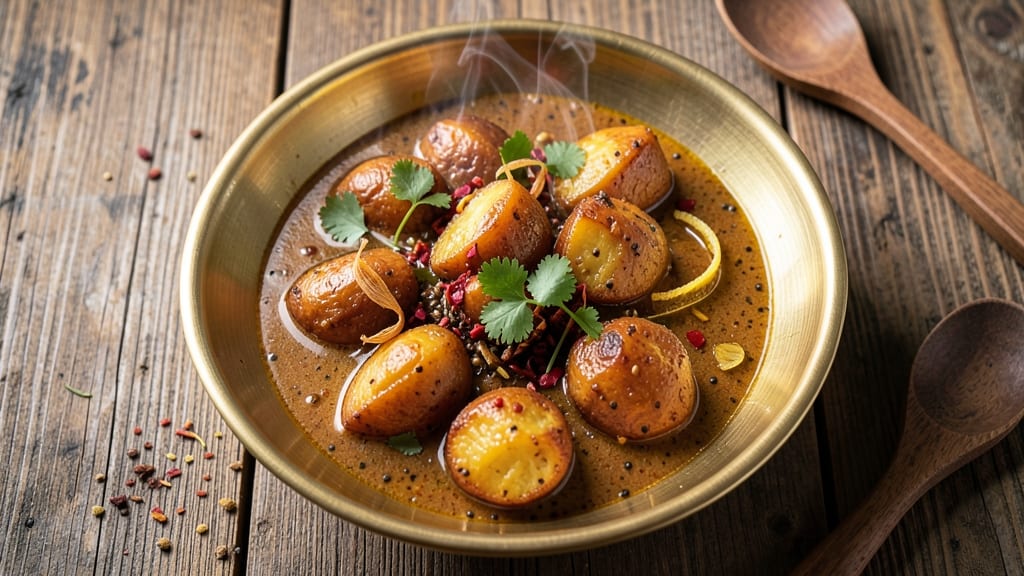
This Bengali potato curry recipe delivers the bold, aromatic flavors of West Bengal in a single pot—where golden potatoes simmer in a fragrant blend of mustard oil, poppy seeds, and earthy spices.
The secret lies in the slow development of flavors, where turmeric and cumin transform humble potatoes into a dish that’s both comforting and deeply satisfying. I’ve perfected this vegetarian version over years of testing, ensuring every bite delivers that signature tangy-spicy depth without compromising authenticity.
The magic begins with mustard oil, which carries the heat and aroma that define Bengali cuisine, while poppy seeds add a subtle nuttiness that rounds out the dish. Turmeric infuses the potatoes with that signature golden hue and earthy warmth, while a touch of yogurt balances the richness.
This curry isn’t just a side—it’s a flavor experience that pairs beautifully with steamed rice or warm rotis, making it a staple for any meal.
What sets this recipe apart is its simplicity: just a handful of ingredients, yet layers of flavor that build as it simmers. The potatoes emerge tender yet firm, coated in a sauce that’s fragrant, slightly tangy, and just spicy enough to linger.
It’s the kind of dish that transforms a simple dinner into a celebration of West Bengal’s culinary tradition, all while being easy enough for a weeknight.
Whether you’re serving it as a standalone vegetarian main or pairing it with other Bengali favorites, this curry delivers restaurant-quality results at home. The key is patience—letting the spices bloom and the flavors meld. Ready to bring a taste of Kolkata to your kitchen? Let’s get cooking.
Ingredients for bengali potato curry
A handful of ingredients that transform into a fragrant, spice-packed Bengali potato curry.
| Ingredient | Amount | Notes |
|---|---|---|
| Yellow Potatoes 🥔 | 2 lb | Medium-sized, peeled and cut even |
| Mustard Oil 🫒 | ½ cup | High-quality, cold-pressed preferred |
| Poppy Seeds 🌾 | 2 tbsp | Lightly toasted for nuttiness |
| Turmeric Powder 🌿 | 1 tbsp | Freshly ground preferred |
| Cumin Seeds 🌿 | 1 tsp | Toasted until fragrant |
| Red Chili Powder 🌶️ | 1 tsp | Adjust for heat preference |
| Garam Masala 🌶️ | 1 tsp | Freshly ground for best flavor |
| Plain Yogurt 🥛 | ½ cup | Unflavored, full-fat preferred |
| Onion 🧅 | 1 whole | Finely chopped, medium-sized |
| Garlic Cloves 🧄 | 4 cloves | Minced, fresh preferred |
| Green Chilies 🌶️ | 2 whole | Slit lengthwise, adjust for heat |
| Fresh Coriander Leaves 🌿 | ¼ cup | Chopped, for garnish |
| Salt 🧂 | 1 tsp | Adjust to taste |
| Water 💧 | 1 ½ cups | For simmering |
Mustard oil is the heart of this dish—look for cold-pressed varieties at Indian grocery stores or specialty markets like Patel Brothers. If you can't find it, vegetable oil works in a pinch, but the flavor won't be authentic. Poppy seeds should be lightly toasted in a dry pan until golden—this brings out their nutty aroma. For turmeric, fresh root is ideal, but powdered works fine if you're short on time. The cumin seeds? Toast them until fragrant—this step is non-negotiable for depth of flavor.
No mustard oil? Vegetable or coconut oil will work, but reduce the amount by half. Running out of poppy seeds? Toasted sesame seeds add a similar nuttiness. The yogurt should be plain and full-fat—Greek yogurt works if that's what you have. For the chilies, fresh green chilies are best, but dried red chilies (soaked and chopped) can substitute. The garam masala is crucial—store-bought blends work, but if you're ambitious, toast whole spices and grind them yourself for a fresher taste.
This curry tastes even better the next day as flavors meld. Store leftovers in an airtight container in the fridge for up to 5 days. For longer storage, freeze portions for up to 3 months. The potatoes should be tender but hold their shape—if they're too soft, reduce simmering time. Garnish with fresh coriander just before serving to keep it vibrant. Pairs perfectly with steamed basmati rice or warm rotis.
Why You'll Love This Recipe
- One-Pot Magic: Honestly, this curry comes together in a single pot—no chopping mountains of veggies or juggling multiple pans. Just dice those yellow potatoes, toast the cumin and poppy seeds in mustard oil, and let the spices work their magic while you sip tea.
- Unmistakable Depth: That nutty aroma from the poppy seeds and mustard oil? It’s chef’s kiss—earthy, warm, and just slightly spicy. The turmeric gives it a golden glow and a subtle brightness that makes every bite feel special, even on a lazy afternoon.
- Leftovers That Shine: Between us, this curry actually tastes better the next day. The flavors meld into something richer, and it reheats like a dream—perfect for packing lunches or feeding unexpected guests. (Yes, even on a Tuesday night.)
- Pocketbook Hero: Mustard oil and poppy seeds might sound fancy, but they’re budget-friendly staples that stretch a meal. A few potatoes, a handful of spices, and you’ve got a hearty, satisfying dish that won’t break the bank—ideal for weeknight dinners or big family gatherings.
Step-by-step instructions for Bengali potato curry
This method delivers a rich, aromatic curry with tender potatoes and balanced spices—authentic and foolproof.
🍳 Step 1: Toast Spices in Mustard Oil
Heat the 0.5 cup mustard oil in a heavy-bottomed pot over medium heat. Add the 2 tbsp poppy seeds and toast for 1 minute until they turn golden and nutty. Immediately add the 1 tsp cumin seeds and toast for another 30 seconds until fragrant—this releases their full flavor and prevents bitterness.
Next, add the 1 whole finely chopped onion and sauté for 4-5 minutes until translucent but not browned. Stir frequently to avoid sticking. The onions should soften completely before moving to the next step—this prevents a raw taste in the final curry.
🍳 Step 2: Add Aromatics and Turmeric
Lower the heat to medium-low and add the 4 minced garlic cloves and 2 slit green chilies. Sauté for 1 minute until the garlic turns golden and the chilies soften slightly. This step develops their flavors without burning them.
Sprinkle in the 1 tbsp turmeric powder and stir vigorously for 30 seconds until the oil turns a vibrant yellow. Turmeric is key here—it not only adds color but also works as a natural preservative. Let the mixture cook for 1 minute to bloom the spices fully before adding the potatoes.
🥘 Step 3: Cook Potatoes Until Tender
Add the 2 lb peeled and evenly cut yellow potatoes to the pot. Stir gently to coat them in the spiced oil. Pour in the 1.5 cups water and bring to a gentle boil. Reduce heat to low and simmer uncovered for 15-18 minutes, stirring occasionally, until the potatoes are fork-tender but not mushy.
Here's the thing—potatoes should absorb the flavors without breaking apart. If they're still firm after 18 minutes, add ¼ cup more water and continue cooking. The goal is tender yet intact potatoes that hold their shape when served.
🍳 Step 4: Build the Creamy Curry Base
Stir in the 0.5 cup plain yogurt and 1 tsp salt, mixing well to combine. Simmer for 3-4 minutes until the yogurt thickens slightly and coats the potatoes. The curry should be creamy but not runny—this is where the texture comes together.
Add the 1 tsp red chili powder and 1 tsp garam masala, stirring constantly for 1 minute to distribute the spices evenly. Taste and adjust salt if needed—Bengali curries balance heat and tang perfectly. The spices should meld into a cohesive, aromatic blend without overpowering the potatoes.
🔥 Step 5: Finish and Garnish
Remove the pot from heat and let the curry rest for 2 minutes. This allows the flavors to settle. Stir in the 0.25 cup chopped fresh coriander leaves just before serving to brighten the dish with freshness.
Serve immediately with steamed rice or warm roti. The curry should have a vibrant yellow-orange hue from the turmeric, a creamy yet slightly thick texture, and a balance of spicy, tangy, and earthy flavors. Each bite should deliver tender potatoes bathed in aromatic, well-seasoned sauce.
Pro Tips For Making Bengali Potato Curry
- Boil Potatoes Tender: Cut them into even 1-inch chunks and drop them into boiling water—yes, boiling, not cold. I used to simmer them gently, and they’d turn mushy by the time the curry was ready. Boiling from the start keeps them firm but cook-fast, so they soak up the flavors without falling apart.
- Toast Poppy Seeds Low: Heat them on low with the mustard oil—just until they turn a golden brown and smell nutty. I learned this the hard way: cranking the heat too high burns them into bitter dust. A minute on low is all you need.
- Temper Mustard Oil Right: Pour the hot oil slowly over the cumin seeds first—this prevents a greasy splatter that’ll have you cursing. I now use a ladle and keep one hand steady, because nobody wants oil everywhere when the poppy seeds are about to join the party.
- Salt Potatoes After Boiling: Wait until the curry’s nearly done to add salt to the potatoes—trust me, this stops them from turning soggy. I used to toss them in early, and they’d absorb too much liquid, making the curry watery. Save the salt for the end.
Essential equipment for this recipe
Mustard Oil Essentials
Mustard oil is the soul of this curry—never substitute with regular vegetable oil. Look for cold-pressed, unrefined mustard oil at Indian grocery stores like Patel Brothers or H-Mart. If unavailable, vegetable oil works but lacks authenticity.
For a budget-friendly alternative, coconut oil adds a mild nutty flavor. Always heat the oil on medium-low to prevent burning, which can make the curry bitter. 🫒
Heavy-Bottomed Pot
A stainless steel or cast iron pot is non-negotiable—these materials distribute heat evenly and prevent scorching. I recommend a 3-4 quart Dutch oven like the Lodge 5.5 Quart for even cooking. Avoid nonstick pots for this recipe—they can’t handle the high heat needed to toast spices properly.
If you only have a lightweight pot, reduce the heat to medium and stir frequently to prevent sticking.
Spice Toasting Tools
Toast your cumin seeds and poppy seeds in a small dry skillet or directly in the curry pot. For precision, use a fine-mesh strainer to separate seeds from husks after toasting.
A mortar and pestle comes in handy if you’re grinding whole spices for homemade garam masala. For convenience, pre-toasted spices are sold at stores like Whole Foods or Bharat Bazaar.
Yogurt Whisk
When adding yogurt, use a whisk to break up lumps and create a silky texture. A hand mixer on low speed works too—just be careful not to overmix. If your yogurt is too thick, thin it slightly with 2 tbsp water before adding.
For extra creaminess, blend the yogurt with 1 tbsp water for a smoother sauce. 🥛
Fresh Ingredient Prep
Chop onions and garlic using a sharp chef’s knife or a mandoline for even slices. For green chilies, slit them lengthwise to release heat without losing texture. A microplane works great for finely grating fresh ginger if you add it.
Store prepped ingredients in airtight containers in the fridge for up to 3 days—this keeps flavors vibrant.
Temperature Control
Use an instant-read thermometer to monitor oil temperature—ideal range is 325-350°F for toasting spices. For simmering potatoes, maintain 180-190°F to prevent boiling over. A stovetop thermometer helps maintain consistent heat, especially on induction cooktops. If your stove lacks precise control, reduce heat slightly and stir more often. ⏰
Nutrition facts
Frequently asked questions
Can I make this curry without mustard oil?
While mustard oil is traditional, you can substitute it with vegetable oil or coconut oil. For authenticity, use 0.25 cup instead of 0.5 cup since these oils have different flavor profiles. Toast the spices in the oil as directed, but expect a slightly milder taste.
How do I adjust the spice level?
Start with the 1 tsp red chili powder and 2 green chilies as written. For milder heat, reduce the chili powder to ½ tsp and remove the seeds from the chilies. If you love spice, add ½ tsp extra chili powder or swap in 1 tsp Kashmiri red chili powder for color with less heat. Taste as you go!
Can I use sweet potatoes instead of yellow potatoes?
Sweet potatoes work but will change the flavor and texture. They’re naturally sweeter and softer, which may make the curry taste different. If using them, reduce cooking time to 12-15 minutes and add ½ tsp lemon juice to balance sweetness. Stick to yellow potatoes for the classic taste.
Why did my curry turn out too dry?
This usually happens if the potatoes absorbed all the liquid or if you simmered too long. Next time, check the potatoes at 15 minutes and add ¼ cup water if needed. For a creamier texture, stir in 2 tbsp yogurt or 1 tbsp heavy cream at the end. Always simmer uncovered to let excess moisture evaporate.
What’s the best way to reheat leftovers?
Reheat gently on the stovetop over low heat with 1-2 tbsp water to restore moisture. Avoid microwaving as it can make the curry greasy. For extra freshness, sprinkle 1 tsp yogurt or 1 tbsp water before reheating. Store leftovers in an airtight container for up to 5 days.