Side Dishes
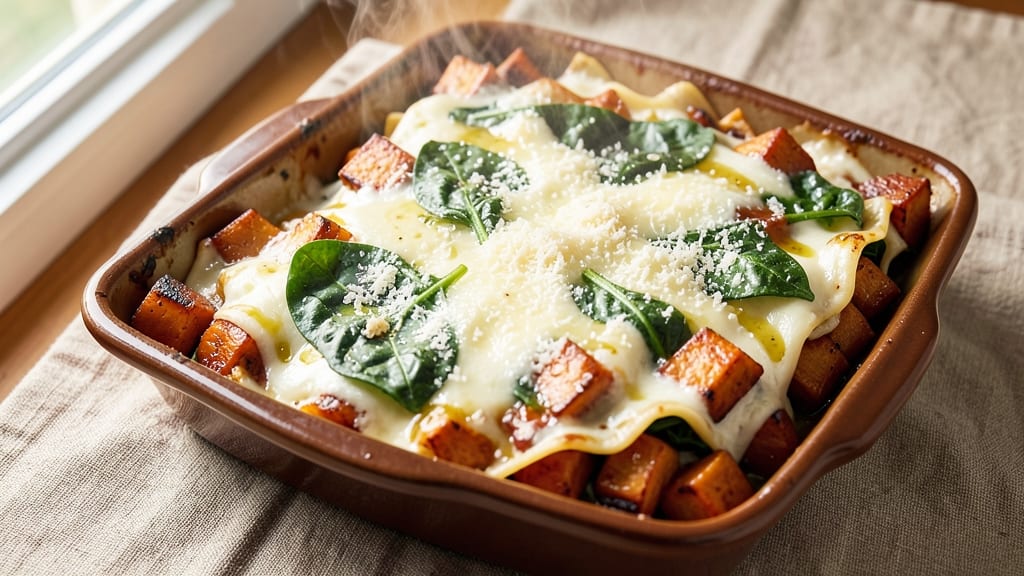
This spinach sweet potato lasagna transforms traditional lasagna into a vibrant, vegetarian masterpiece with layers of earthy sweet potatoes and tender spinach. The secret lies in perfectly roasted sweet potatoes that caramelize into sweet, creamy bites while the spinach maintains its vibrant green color—no wilting or soggy layers here.
What makes this recipe stand out is the combination of rich, savory béchamel and melted cheese that binds everything together into one cohesive, restaurant-quality dish.
Unlike classic lasagna that requires hours of boiling noodles and layering, this version uses no-boil noodles to cut prep time dramatically while still delivering that satisfying, hearty texture.
The sweet potatoes are roasted until tender and slightly crispy at the edges, adding natural sweetness that balances the savory cheese and spinach. This dish isn’t just vegetarian—it’s a flavor-packed centerpiece that even meat lovers will devour.
By the time it emerges from the oven, you’ll have a lasagna with golden, bubbling cheese on top, perfectly al dente noodles, and layers of sweet potatoes and spinach that melt in your mouth.
The aroma alone will have everyone gathering around the table, and each bite delivers a perfect harmony of textures and flavors. Whether you’re feeding a family or entertaining guests, this lasagna delivers comfort food at its finest without the heaviness.
For those with dietary restrictions, swapping regular cheese for vegan alternatives keeps the dish inclusive while maintaining its rich, creamy texture. Serve with a simple arugula salad or garlic bread to complete the meal. Ready to create this showstopper? Let’s get started with the ingredients.
Ingredients for spinach sweet potato lasagna
Sweet potatoes, spinach, and no-boil noodles—this vegetarian lasagna packs bold flavor without the heavy layers.
| Ingredient | Amount | Notes |
|---|---|---|
| Large Sweet Potatoes 🍠 | 3 whole | Medium-sized, peeled and cubed |
| Fresh Spinach 🌿 | 10 oz | Baby spinach, roughly chopped |
| No-Boil Lasagna Noodles 🍝 | 12 pieces | 9-inch by 12-inch pan size |
| Ricotta Cheese 🧀 | 2 cups | Part-skim for creaminess |
| Mozzarella Cheese 🧀 | 2 cups | Shredded, low-moisture |
| Parmesan Cheese 🧀 | 1 cup | Freshly grated |
| Heavy Cream 🥛 | 1 cup | Full-fat for richness |
| All-Purpose Flour 🌾 | 2 tbsp | For béchamel roux |
| Garlic Cloves 🧄 | 4 cloves | Minced for béchamel |
| Olive Oil 🫒 | ½ cup | Extra-virgin for roasting |
| Salt 🧂 | 1 ½ tsp | Kosher or sea salt |
| Black Pepper 🌶️ | ½ tsp | Freshly ground |
| Nutmeg 🌿 | ¼ tsp | Freshly grated |
| Butter 🧈 | 2 tbsp | Unsalted, for béchamel |
The sweet potatoes are the star here—look for vibrant orange ones with smooth skin, not those with green spots. Trader Joe's and Whole Foods usually have the best selection. Medium-sized potatoes work perfectly—too big and they won't caramelize evenly. Peeled and cubed, they roast up tender with crispy edges. For the spinach, baby spinach is ideal—it wilts faster but keeps its bright color. The ricotta matters too—part-skim gives great texture without being too heavy. If you can't find no-boil noodles, cook regular lasagna noodles one minute less than package instructions.
No ricotta? Cottage cheese blended smooth works in a pinch, though it's slightly grainier. Swapping mozzarella? Provolone or fontina melts beautifully too. The béchamel is where the magic happens—butter and flour roux makes it creamy. No butter? Olive oil works, but it won't be as rich. For the garlic, fresh is non-negotiable—jarred has no flavor. The nutmeg adds depth, but if you're missing it, a pinch of cinnamon gives a similar warmth. Pre-shredded cheese? Don't use it—it gets gummy when melted.
Roasted sweet potatoes keep 3 days in the fridge, so make them ahead. The lasagna reheats beautifully—cover with foil for 10 minutes to melt the cheese evenly. Leftovers freeze for 2 months if wrapped tightly. For extra crispy edges, broil for 2-3 minutes at the end. This dish tastes even better the next day as flavors meld—worth making ahead for company. Store the ricotta mixture separately if prepping early, then assemble before baking.
Why You'll Love This Recipe
- No-Bake Nightmare Over: I swear, the no-boil noodles here mean zero waiting—just layer, cover, and bake. No pre-cooking, no fuss, no stress. Honestly, I’ve made lasagna before where I forgot to boil the noodles first, and this? This is my redemption.
- Sweet Potato Magic: That roasted sweet potato? It turns creamy and caramelized, almost like a secret sauce. The spinach wilts into oblivion, blending into the ricotta so you don’t even notice the veggies—unless you’re secretly proud of yourself for sneaking them in.
- Leftover Goldmine: This dish actually improves the next day. The sweet potatoes get even sweeter, the cheese pulls tighter, and somehow, it’s even better cold for lunch. Between us, I’ve reheated portions for five days and no one’s complained—yet.
- Budget-Friendly Feast: Sweet potatoes and spinach stretch this into a full meal without breaking the bank. Mozzarella and ricotta add richness, but you’re not drowning in expensive ingredients. I’ll be real: my grocery bill for this is half what it’d be for a beef lasagna, and no one’s missing the meat.
Step-by-step instructions for spinach sweet potato lasagna
Let's build this lasagna layer by layer—creamy, cheesy, and packed with sweet potato goodness.
Roast the Sweet Potatoes Until Tender
Preheat your oven to 400°F and line a baking sheet with parchment paper. Toss the 3 whole large sweet potatoes (peeled and cubed) with 0.5 cup olive oil, 1 tsp salt, and 0.25 tsp black pepper. Spread them in a single layer on the baking sheet.
Roast for 25-30 minutes until the sweet potatoes are fork-tender and their edges begin to brown slightly. You'll know they're done when they yield easily to a fork but still hold their shape. Let them cool slightly before using—they'll be hot!
Prepare the Spinach-Ricotta Mixture
In a large bowl, combine the 10 oz fresh spinach (roughly chopped) with 2 cups ricotta cheese, 1 cup freshly grated parmesan cheese, 0.25 tsp nutmeg, and 0.25 tsp black pepper. Mix until the spinach is fully wilted and the ricotta is evenly distributed.
This mixture should be thick but spreadable—like a rich, herby mashed potato. If it's too thick, stir in 1-2 tablespoons of heavy cream to loosen it. Set aside while you prepare the béchamel sauce.
Make the Creamy Béchamel Sauce
In a medium saucepan, melt the 2 tbsp butter over medium heat. Add the 4 minced garlic cloves and sauté for 30 seconds until fragrant—don't let it brown, or it'll turn bitter. Sprinkle in the 2 tbsp all-purpose flour and whisk constantly for 1-2 minutes until the mixture forms a smooth paste.
Gradually pour in the 1 cup heavy cream while whisking vigorously to prevent lumps. Add 0.5 tsp salt and 0.25 tsp black pepper, then simmer for 3-5 minutes until the sauce thickens enough to coat the back of a spoon. Remove from heat and set aside.
Assemble the Lasagna Layers
Preheat your oven to 375°F. In a 9x13-inch baking dish, spread a thin layer of the béchamel sauce on the bottom to prevent sticking. Add a single layer of the 12 no-boil lasagna noodles, slightly overlapping them if needed.
Spread half of the spinach-ricotta mixture evenly over the noodles, followed by half of the roasted sweet potatoes. Sprinkle with 1 cup mozzarella cheese, then pour another thin layer of béchamel sauce. Repeat with another layer of noodles, remaining spinach-ricotta mixture, sweet potatoes, and mozzarella. Top with a final layer of noodles and the remaining béchamel sauce.
Bake Until Bubbly and Golden
Cover the lasagna tightly with aluminum foil and bake for 30 minutes. Remove the foil and bake for another 10-15 minutes until the top is golden brown and bubbly. The edges should be slightly crispy, and the cheese should be melted and pull away from the sides.
Let the lasagna rest for 10-15 minutes before slicing—this allows the layers to set and makes it easier to serve. Each slice should be packed with creamy ricotta, tender sweet potatoes, and wilted spinach, all held together by that rich béchamel sauce. Enjoy warm with a side salad or garlic bread!
Pro Tips For Making Spinach Sweet Potato Lasagna
- ROAST SWEET POTATOES FIRST: I learned this the hard way—slicing raw sweet potatoes into thin layers always leads to a soggy mess. Roast them whole at 400°F (200°C) for 45-50 minutes first, then slice them into ¼-inch rounds while still warm. They’ll hold their shape and add that caramelized sweetness without turning to mush.
- WILT SPINACH DRY: Fresh spinach is great, but if you don’t squeeze out every last drop of water, your lasagna layers will swim in a pool of liquid. After wilting, spread the spinach on a clean kitchen towel, fold it over, and press gently—like you’re making a tiny burrito. This step cuts down on that sad, watery middle layer.
- LAYER RICOTTA THIN: Too much ricotta between layers makes the noodles soggy before they even hit the oven. Spread it thin—about ¼-inch thick—using the back of a spoon or a bench scraper. You’ll need more volume than you think, but thin layers guarantee that creamy texture without the gloop.
- PRESS NOODLES BEFORE ASSEMBLY: No-boil noodles are forgiving, but they still need a little help. After layering, press down hard with a plate or your hands—like you’re trying to flatten a pancake. This locks the layers together so they don’t separate when you pull it out of the oven. (Yes, even if you’re impatient like me.)
Troubleshooting your spinach sweet potato lasagna
Soggy Noodle Fix
If your lasagna noodles turn out mushy, it’s usually from too much moisture in the filling or not enough baking time. First, ensure your spinach is fully wilted before mixing with ricotta—excess water is the enemy.
I’ve found that overfilling the baking dish (more than 2 inches high) also causes sogginess, so aim for even layers with no gaps. If it happens, try baking uncovered for an extra 5-10 minutes to evaporate excess moisture. 💧
Cheese Not Melting
Unevenly melted cheese is often due to baking at too low a temperature or not enough time uncovered. Always bake the lasagna covered with foil for the first 30 minutes at 375°F, then uncover for the final 10-15 minutes to crisp the top.
For extra insurance, sprinkle 1/4 cup grated parmesan on top before the final bake—it acts like a protective crust. Pre-shredded cheese? Don’t use it—it contains anti-caking agents that prevent proper melting. 🧀
Sweet Potatoes Too Hard
If your sweet potatoes remain undercooked, they likely weren’t roasted long enough or weren’t cut evenly. Cube them into 1-inch pieces (no larger) for consistent cooking. Roast at 400°F for 25-30 minutes, flipping halfway if needed.
A fork test is key—they should pierce easily but still hold shape. For extra tenderness, parboil them for 5 minutes before roasting if you’re short on time. 🍠
Spinach Losing Color
Bright green spinach can turn dull if overcooked or mixed too early. Wilt the spinach separately over a pot of boiling water for 30 seconds, then drain and squeeze out excess water before mixing with ricotta.
Avoid adding it raw to the filling—it’ll release too much moisture. For extra vibrancy, add a pinch of lemon zest to the ricotta mixture. 🌿
Béchamel Too Thick
A lumpy or overly thick béchamel usually means not enough whisking or rushing the cooking time. Always whisk vigorously when adding the cream to the butter-flour roux, and simmer for 3-5 minutes until it coats the back of a spoon.
If it’s still too thick, thin it with 1-2 tablespoons of warm milk or cream. For a smoother texture, strain it through a fine-mesh sieve before assembling. 🥛
Lasagna Sticking to Pan
Even with no-boil noodles, lasagna can stick if the baking dish isn’t properly prepared. Always spread a thin layer of béchamel sauce on the bottom before adding noodles. For extra insurance, lightly grease the pan with olive oil before pouring the sauce.
If it still sticks, run a hot, wet knife around the edges before serving—it’ll slide right out. 🔥
Nutrition facts
Frequently asked questions
Can I make this lasagna ahead of time?
Assemble the lasagna up to 24 hours ahead and refrigerate uncovered. When ready to bake, add 15-20 extra minutes to the baking time (cover with foil for the first 30 minutes at 375°F, then uncover for 15-20 minutes). This helps the layers meld even better.
How do I make this recipe vegan?
Replace ricotta with 1.5 cups blended silken tofu mixed with 2 tbsp nutritional yeast, 1 tbsp lemon juice, and 1 tsp garlic powder. Use vegan mozzarella and cashew cream for béchamel (blend 1 cup soaked cashews, 1 cup water, 2 tbsp lemon juice, and 1 tsp salt). The texture will be slightly different but still delicious!
Why does my lasagna look dry after baking?
Dry lasagna usually means too much baking time or not enough moisture in the layers. Check if you used pre-shredded cheese (it releases water when melted). Instead, use block cheese and shred it yourself. Also, ensure your béchamel sauce is thick but creamy—not too dry. For extra moisture, add 2-3 tbsp heavy cream to the ricotta-spinach layer.
Can I substitute butternut squash for sweet potatoes?
Yes, butternut squash works beautifully! Peel, cube, and roast it the same way (400°F for 25-30 minutes). For extra flavor, toss it with 1 tsp cinnamon and 1 tsp maple syrup before roasting. Butternut squash has a slightly sweeter, nuttier taste that pairs wonderfully with the spinach and cheese.
How do I reheat leftovers without drying them out?
Reheat leftovers in the oven for the best results. Cover with foil and bake at 350°F for 15-20 minutes until warmed through. For the microwave, place a damp paper towel over the lasagna and heat in 1-minute intervals on 50% power, stirring between each interval. Avoid reheating in the microwave uncovered—it’ll dry out the layers.