
Side Dishes
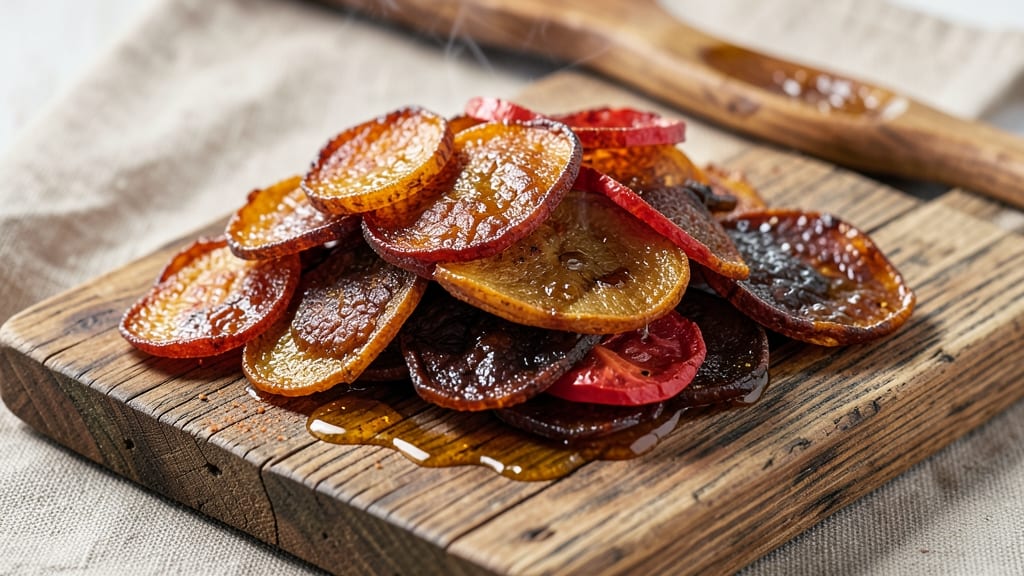
This sweet potato jerky recipe transforms humble sweet potatoes into smoky, chewy bites that pack serious protein-like satisfaction without any meat. The secret lies in thin, even slicing and precise dehydration—no fancy equipment, just patience and a food dehydrator set to 160°F for that perfect texture.
I developed this after craving something savory-sweet that held up like traditional jerky, and the results are surprisingly addictive.
The process starts with pre-soaking the slices in a tangy marinade of soy sauce, maple syrup, and smoked paprika for 30 minutes—this builds flavor while preventing gummy texture.
Thin slices (about 1/8-inch) are critical for even drying, and the dehydrator does the rest in 6-8 hours, leaving you with jerky that's crispy on the outside but tender inside. It's a game-changer for snacking, trail mixes, or even vegan protein boosts.
What makes this recipe stand out is its versatility—use it as a crunchy topping for salads, a protein-packed snack for hiking, or a creative addition to charcuterie boards. The smoky-sweet flavor profile balances perfectly with spicy dips or creamy cheese spreads.
Best of all, it stores for weeks in an airtight container, making it a pantry staple that's both budget-friendly and impressive.
For optimal results, avoid overcrowding the dehydrator trays—this ensures even airflow and prevents soggy spots. If you don't have a dehydrator, an oven set to 170°F with the door slightly open works in a pinch.
The key is consistency: monitor the jerky after 4 hours to check for doneness. Once cooled, it's ready to enjoy—or share with anyone who thinks vegan snacks can't be this satisfying.
Ingredients for sweet potato jerky
Eight simple ingredients transform sweet potatoes into addictive, protein-like jerky bites.
| Ingredient | Amount | Notes |
|---|---|---|
| Large Sweet Potatoes 🍠 | 2 whole | Organic preferred, skin-on for stability |
| Organic Soy Sauce 🥢 | ½ cup | Tamari for gluten-free option |
| Pure Maple Syrup 🍁 | ⅓ cup | Grade B for deeper flavor |
| Smoked Paprika 🌶️ | 2 tbsp | High-quality for smoky depth |
| Liquid Smoke 🔥 | 1 tsp | Optional for extra smokiness |
| Apple Cider Vinegar 🍎 | 1 tbsp | For tangy brightness |
| Onion Powder 🧅 | 1 tsp | Freshly ground preferred |
| Garlic Powder 🧄 | 1 tsp | Not garlic salt |
| Salt 🧂 | 1 tsp | Diamond Crystal preferred |
| Black Pepper 🌶️ | ½ tsp | Freshly cracked for heat |
| Extra-Virgin Olive Oil 🫒 | 1 tbsp | For slick slicing surface |
Sweet potatoes are the star here—organic, firm varieties like Jewel or Beauregard work best. Trader Joe's and Whole Foods carry excellent options, or grab a couple from the produce section at your local grocery. Look for ones that feel heavy for their size, a sign of sweetness. The skin-on variety is ideal for stability during slicing, but peel if you prefer. For even slices, slice lengthwise into 1/4-inch planks first, then cut crosswise into 1/8-inch strips—consistency is key for uniform drying. If you're feeling fancy, invest in a mandoline for precision, but a sharp knife works too.
No soy sauce? Coconut aminos or even extra tamari will work in a pinch, though the flavor won't be identical. Maple syrup can be swapped for agave nectar if you're watching sugar content, but the molasses notes in Grade B maple add depth. Smoked paprika is non-negotiable for that authentic jerky flavor—Penzeys or Goya brands are reliable. The liquid smoke is optional but worth it if you love that campfire taste; half the amount is plenty. For extra tang, a splash of balsamic vinegar works too. If you're dehydrating in an oven, line your trays with parchment paper for easy removal—no sticking means no wasted jerky.
This jerky keeps for 2-3 weeks in an airtight container at room temperature, or 3 months in the freezer if you want to stock up. Store in a glass jar or vacuum-sealed bag to preserve freshness. Once cooled, it's perfect for snacking straight up, tossing into salads, or packing for hikes. For extra crunch, give it a light spray of olive oil before dehydrating. And if you're feeling experimental, try adding a pinch of cayenne to the marinade for some heat.
Why You'll Love This Recipe
- No-Fuss Prep: I swear, this takes less effort than ordering takeout. Slice those sweet potatoes into thick strips, toss them in a bowl with the soy sauce and maple syrup—no peeling, no intricate cuts, just five minutes of hands-on time before the oven does all the work.
- Smoky-Sweet Magic: Between us, the combo of smoked paprika and liquid smoke gives it that deep, campfire-like flavor, while the maple syrup keeps it from being too dry. It’s sweet but not cloying, savory but not heavy—like a cross between jerky and candy, and honestly? I can’t stop snacking on it.
- Snack Attack Everywhere: This isn’t just for hiking trips or game days. I keep a stash in my desk drawer for when I’m craving something salty-sweet, and it’s also perfect for packing in kids’ lunches (yes, even my picky eater’s approved it). Plus, it’s the kind of thing you can serve at parties without needing a full spread—just grab a plate and go.
- Budget-Friendly Stash: Sweet potatoes are cheap, and this recipe stretches them far. A single batch lasts me a week, and I’m not exaggerating—my husband sneaks bites when he thinks I’m not looking. No fancy ingredients, no waste, and no last-minute grocery runs. It’s my go-to when I need to feed the family without breaking the bank.
Step-by-step instructions for sweet potato jerky
Transform humble sweet potatoes into addictive, protein-packed jerky with this smoky-sweet method.
Prepare the Sweet Potatoes for Perfect Slices
Start by peeling the 2 whole large sweet potatoes using a vegetable peeler or sharp knife. I like to leave about ¼-inch of skin on for stability, but remove any blemishes. Cut each potato lengthwise into ¼-inch thick slices—this thickness ensures even drying without becoming brittle.
Lay the slices on a tray lined with paper towels and let them sit for 10 minutes. This resting period prevents them from sticking together when you handle them. While they rest, use a paper towel to pat them completely dry. Moisture is the enemy of jerky—you want slices that are bone dry before marinating, or your final product will be chewy rather than crisp.
Create the Signature Smoky-Sweet Marinade
In a medium bowl, whisk together the 0.5 cup organic soy sauce, 0.33 cup pure maple syrup, 2 tablespoons smoked paprika, 1 teaspoon liquid smoke, 1 tablespoon apple cider vinegar, 1 teaspoon onion powder, 1 teaspoon garlic powder, 1 teaspoon salt, and 0.5 teaspoon black pepper until fully combined. The mixture should be thick and well-blended—this ensures even flavor distribution.
Here's where the magic happens: the smoked paprika and liquid smoke create that deep, campfire-like flavor, while the vinegar and maple syrup balance with tangy brightness. Give it a taste—it should be sweet, salty, and just slightly acidic. If you prefer less sweetness, reduce the maple syrup by 1 tablespoon.
Marinate the Sweet Potato Slices
Add the dried sweet potato slices to the marinade, turning them to coat evenly on all sides. Place them in a single layer in a shallow dish or resealable plastic bag, ensuring they don't overlap. Let them marinate in the refrigerator for at least 2 hours, or up to overnight for maximum flavor penetration.
During marinating, the soy sauce and vinegar will begin breaking down the sweet potato fibers, creating that satisfying chewy texture we love in jerky. If you're short on time, you can marinate for just 30 minutes, but the longer they sit, the more intense the flavor becomes. I always marinate overnight when possible—it makes a noticeable difference.
Dry the Jerky for Maximum Crunch
Preheat your oven to 200°F. Line two baking sheets with parchment paper and arrange the marinated sweet potato slices in a single layer, leaving about ½-inch between each piece. This spacing is crucial—it allows air to circulate and prevents steaming, which would make your jerky soggy.
Bake for 2 to 2.5 hours, flipping the slices every 30 minutes. You're looking for jerky that's completely dry and slightly crispy around the edges. To test doneness, pick up a slice—it should feel dry to the touch and not leave any moisture on your fingers. If it's still slightly sticky, return it to the oven for another 15 minutes.
Finish with Olive Oil for Extra Shine
Once the jerky is fully dried, remove it from the oven and let it cool completely on a wire rack. While it's still warm, brush each piece lightly with the 1 tablespoon extra-virgin olive oil using a pastry brush. This step adds a subtle richness and gives the jerky a beautiful glossy finish.
Let the jerky cool for another 10 minutes before storing. The oil will set as it cools, creating that perfect balance between crispy and chewy. Store in an airtight container in the refrigerator for up to 2 weeks, or freeze for up to 3 months. Enjoy these smoky-sweet bites as a snack, trail mix addition, or even as a crunchy topping for salads!
Pro Tips For Making Sweet Potato Jerky
- Slice Evenly, Thin: Sweet potatoes vary in density—some spots are rock-hard, others soft. Use a mandoline set to ¼-inch (6mm) for consistency, and trim any uneven edges with a knife. I learned this the hard way when my first batch turned out chewy in places and crispy in others.
- Marinate Overnight, Not Just Hours: The soy sauce and maple syrup need time to penetrate that dense sweet potato. Dump everything in a ziplock, toss well, and let it sit 12+ hours in the fridge. I used to rush it, and the jerky always tasted like a sad, one-sided flavor party.
- Dry the Slices First: Pat them bone dry with paper towels before dehydrating—no shortcuts. Wet slices steam instead of crisping, and you’ll end up with sad, gummy jerky. Pro move: Spread them on a wire rack for 30 minutes before cooking to guarantee even drying.
- Balance Liquid Smoke Carefully: Start with ½ teaspoon per pound of sweet potato slices, then taste-test after 2 hours of dehydrating. Too much, and it’ll taste like a campfire disaster. Too little, and you’ve wasted your effort. Adjust in ¼-teaspoon increments—this isn’t a guess.
Essential equipment for this recipe
Dehydrator Essentials
If you're serious about making sweet potato jerky, a food dehydrator is your best friend. I use the Nesco FD-75A Snackmaster—it's affordable, reliable, and maintains consistent temperatures. Look for models with adjustable thermostats so you can set it precisely to 160°F, which is ideal for jerky.
The Excalibur 3926EB is another top pick for even airflow and quiet operation. 🌡️
For smaller batches or budget options, the Cosori Premium Food Dehydrator works well too. Just avoid cheap models—they often struggle with temperature fluctuations, leading to uneven drying. Pro tip: Clean your dehydrator trays with white vinegar and water before each use to prevent bacterial growth from previous batches.
Oven Alternatives
No dehydrator? No problem! Your oven can handle the job with a little extra care. Set it to 170°F (instead of 160°F) and prop the door open with a wooden spoon or oven mitt to allow moisture to escape.
I line my baking sheets with parchment paper to prevent sticking and ensure even drying. 🔥
For best results, use the convection setting if your oven has it—it circulates air better, cutting drying time by up to 30%. Avoid opening the oven door during the process, as this disrupts airflow and extends drying time.
If your oven lacks convection, flip the slices every 30 minutes for even drying.
Mandoline Slicer
A mandoline slicer is a game-changer for achieving those perfect, 1/8-inch-thick slices. The OXO Good Grips model is my go-to—it's easy to use and comes with safety guards to protect your fingers.
Thin, even slices dehydrate faster and more evenly, preventing gummy spots. If you don't own one, a sharp chef's knife and steady hand work too, but it takes more practice. 🍠
For extra stability, chill the sweet potato slices in the freezer for 10 minutes before slicing—they'll hold their shape better. Just be sure to pat them completely dry afterward, or they'll steam instead of dehydrate in the oven or dehydrator.
Storage Containers
Once your jerky is cooled, store it in airtight containers to keep it fresh. I love glass mason jars with silicone lids—they're reusable, stackable, and prevent moisture buildup. For longer storage, vacuum-sealed bags are ideal, especially if you're freezing the jerky for up to 3 months.
Avoid plastic containers with poor seals, as they can trap moisture and make the jerky soggy. ❄️
Label your containers with the date—jerky keeps for 2-3 weeks at room temperature, but it's best enjoyed within 1 week for peak texture. If you notice any soft spots or off smells, toss it—food safety first!
Nutrition facts
Frequently asked questions
Can I use regular potatoes instead of sweet potatoes?
Regular potatoes won't work well—they lack the natural sweetness and moisture balance that makes this jerky work. Sweet potatoes have a lower water content and higher sugar content, which caramelizes beautifully during dehydration. If you're set on using regular potatoes, try adding extra maple syrup to the marinade and expect a slightly less chewy texture.
How do I prevent my sweet potato jerky from turning out gummy?
Gummy jerky usually happens from uneven drying or too-thick slices. First, ensure your slices are 1/8-inch thick or thinner—consistency is key! Second, make sure they're completely dry before marinating. Finally, avoid overcrowding your dehydrator or oven trays—leave 1/2-inch between slices for proper airflow. If using an oven, keep the door slightly open to release moisture.
Can I make this recipe without a dehydrator?
Use your oven set to 170°F with the door propped open slightly. Line baking sheets with parchment paper and arrange slices in a single layer. Bake for 2-2.5 hours, flipping every 30 minutes. The convection setting (if available) works best for even drying. Just be patient—it may take longer than a dehydrator.
How long will my sweet potato jerky last?
When stored in an airtight container at room temperature, it keeps for 2-3 weeks. For longer storage, freeze it in vacuum-sealed bags or glass jars for up to 3 months. Check for freshness by looking for any soft spots or off smells—when in doubt, toss it! The jerky will also stay crispier if stored with a small piece of bread or a silica gel packet to absorb moisture.
What can I do with leftover marinade?
Don't waste it! The leftover marinade makes a fantastic glaze for roasted vegetables, a dipping sauce for tofu or veggie sticks, or even a quick stir-fry sauce. Simmer it in a small saucepan for 5 minutes to thicken slightly, then reduce by half to intensify the flavors. Store it in the fridge for up to 1 week or freeze for 3 months.