Side Dishes
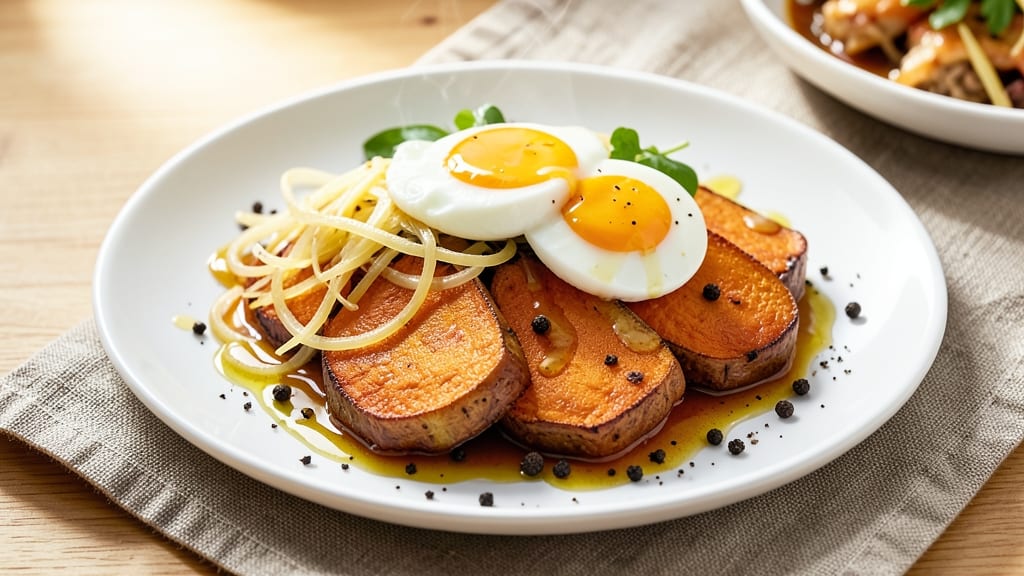
This sweet potato lyonnaise recipe transforms humble sweet potatoes into crispy, caramelized bites with delicate onion lace—proof that French technique meets modern flavors. 🔥 The secret lies in slow-cooking onions until they're golden and translucent, then tossing them with sweet potatoes that develop a perfect crust.
I've perfected this method after years of experimenting, and it never fails to impress. What makes this dish special is how the sweet potatoes absorb the caramelized onions and mustard, creating layers of flavor in every bite.
The texture is what sets it apart: tender sweet potatoes with crispy edges, all coated in that rich onion-mustard glaze. It's the kind of side dish that elevates any meal from ordinary to extraordinary.
The process is simpler than it sounds—just dice the sweet potatoes, caramelize the onions, and let them cook together until golden brown. The mustard adds a tangy depth that balances the natural sweetness of the potatoes, while the onions provide that signature French flavor.
Serve this lyonnaise alongside grilled meats, roasted chicken, or even as a vegetarian main. The crispy texture and rich flavors make it a standout dish that's worth the effort. Let's get started!
Ingredients for sweet potato lyonnaise
French-inspired ingredients that transform simple sweet potatoes into restaurant-quality bites.
| Ingredient | Amount | Notes |
|---|---|---|
| Sweet Potatoes 🍠 | 2 lbs | Medium, peeled and diced into 1-inch cubes |
| Yellow Onions 🧅 | 3 whole | Thinly sliced into lace-like strips |
| Unsalted Butter 🧈 | 6 tbsp | European-style preferred for richness |
| Dijon Mustard 🍯 | 1 tbsp | High-quality for authentic flavor |
| Olive Oil 🫒 | 2 tbsp | Light extra-virgin for balance |
| Salt 🧂 | 1 ½ tsp | Kosher or sea salt, freshly ground |
| Black Pepper 🌶️ | ½ tsp | Freshly cracked for depth |
| Fresh Thyme 🌿 | 1 tbsp | Leaves only, finely chopped |
| Garlic Cloves 🧄 | 2 cloves | Minced for subtle aroma |
| Chicken Broth 💧 | ½ cup | Low-sodium for flavor base |
| Balsamic Vinegar 🍷 | 1 tsp | For finishing touch |
| Fresh Parsley 🌿 | ¼ cup | Chopped for garnish |
The sweet potatoes are the foundation—choose firm, vibrant orange ones with no soft spots. Trader Joe's or Whole Foods carry the best varieties for this dish. The onions should be sweet, not bitter, so yellow onions work perfectly. For the butter, Plugrá or European-style brands add richness that regular butter can't match. Fresh thyme and parsley elevate the dish, so grab them from the grocery store's herb section—they should smell aromatic, not wilted. The Dijon mustard needs to be high-quality; Maille or Amora are my go-to brands for that authentic tang.
No yellow onions? Red or white onions work in a pinch, though they'll add slight color variations. Substituting butter with olive oil or ghee keeps the dish vegan-friendly. Fresh herbs wilted? Dried thyme or parsley at one-third the amount will work, though texture will differ. For the mustard, whole-grain Dijon adds texture if you prefer that variation. The chicken broth can be swapped for vegetable broth for a vegetarian version, though flavor depth will shift slightly. Balsamic vinegar is optional but adds that signature French touch—skip it if you prefer a simpler profile.
Sweet potatoes keep for up to 2 weeks in a cool, dark place, while onions last 1-2 weeks in the fridge once sliced. The caramelized onions can be prepped ahead and stored in the fridge for 3-4 days—just reheat gently before tossing with potatoes. Fresh herbs should be used within 5 days; store them in a glass of water like flowers. The finished lyonnaise reheats beautifully—3-5 minutes in a skillet over medium heat restores that crispy texture. Portion into containers for 3-4 days of meal prep.
Why You'll Love This Recipe
- One-Pan Magic: I swear by this when I’m too tired to scrub pots—just slice, sauté, and let the butter and onions caramelize while the sweet potatoes roast. No flipping, no fuss, just hands-off cooking that still feels special.
- Buttery Mustard Kiss: That Dijon mustard cut into the butter? It’s the secret weapon—tangy enough to cut through the sweetness but rich enough to make every bite feel indulgent. Honestly, I’ll take this over fussy sauces any day.
- Lunchbox Hero: Between us, this is my go-to for meal prep. Slice it into the fridge, and it’s ready to reheat or eat cold—perfect for packed lunches or a lazy afternoon. My kids even ask for it (okay, fine, I bribe them with it).
- Budget Stretch: Sweet potatoes and onions are cheap, but this tastes like a restaurant dish. I can feed four people for under $8, and the leftovers reheat like a dream—no soggy textures, just rich, crispy edges every time.
Step-by-step instructions for sweet potato lyonnaise
Transform humble sweet potatoes into restaurant-worthy bites with perfect caramelization and crispy edges.
🔥 Step 1: Par-Cook the Sweet Potatoes Until Tender
In a large pot, combine the 2 lbs sweet potatoes with 2 tbsp olive oil, 1.5 tsp salt, and 0.5 tsp black pepper. Cover with water by 2 inches and bring to a boil over high heat. Once boiling, reduce to medium-high and cook for 12-15 minutes until a knife slides in easily but still offers slight resistance.
Drain immediately and transfer the potatoes to a rimmed baking sheet. Toss gently with a fork to separate any clumps and let them steam-dry for 5 minutes. This par-cooking ensures even cooking later while preventing a gummy texture. The potatoes should be fork-tender but not falling apart.
🍳 Step 2: Build the Mustard-Butter Base
In a 12-inch cast-iron skillet (essential for even heat distribution), melt 4 tbsp unsalted butter over medium heat until foaming subsides. Add the 1 tbsp Dijon mustard and whisk vigorously for 30 seconds until fully combined. The mustard will deepen in color as it emulsifies with the butter.
Add the 3 whole yellow onions in a single layer, spreading them evenly. Cook for 8-10 minutes without stirring, allowing them to caramelize into delicate lace-like strips. You'll know they're ready when they're golden brown with crisp edges but still tender. Here's the thing—don't walk away. Onions burn faster than you think.
🔥 Step 3: Add Sweet Potatoes and Caramelize
Push the onions to one side of the skillet, add the remaining 2 tbsp unsalted butter, and let it melt. Add the par-cooked sweet potatoes in a single layer, spreading them out. Cook undisturbed for 5 minutes until the bottom develops a deep golden crust. This is where the magic happens—those crispy bits create the signature texture.
Using a spatula, carefully flip the sweet potatoes and onions together. Add the 2 minced garlic cloves and 1 tbsp fresh thyme, stirring gently to combine. Cook for another 3-4 minutes, stirring occasionally, until the sweet potatoes are tender with crispy edges and the onions are fully caramelized. The skillet should smell like a French bistro—sweet, nutty, and slightly smoky.
🥘 Step 4: Deglaze and Finish with Broth
Pour in the 0.5 cup chicken broth and scrape up any browned bits from the bottom of the skillet with a wooden spoon. These bits are packed with flavor—don't miss them. Let the mixture simmer gently for 2-3 minutes until the broth reduces by half and clings to the vegetables.
Remove from heat and stir in the 1 tsp balsamic vinegar. This final touch adds a bright acidity that cuts through the richness. Taste and adjust seasoning if needed—you might need a pinch more salt to balance the sweetness. The lyonnaise should be thick enough to coat the back of a spoon but still have a saucy quality.
🍽️ Step 5: Garnish and Serve Immediately
Transfer the lyonnaise to a serving platter and sprinkle with 0.25 cup fresh parsley. The parsley adds freshness and a pop of color that makes the dish look as good as it tastes. Serve immediately while the sweet potatoes are still crispy—this dish doesn't wait. The perfect bite should deliver tender sweet potato, caramelized onions, and that mustard-butter richness all at once.
For an elevated presentation, arrange the lyonnaise on a bed of mixed greens or serve with a poached egg on top. The contrast of warm lyonnaise with a runny yolk is pure indulgence. Real talk: this dish tastes even better the next day when the flavors meld further, but the crispy edges will be less pronounced.
Pro Tips For Making Sweet Potato Lyonnaise
- Peel and Cube First: Sweet potatoes release starch when cut—peel and chop them before heating your pan. I learned this the hard way when my onions stuck to the bottom like glue; prepping them first keeps everything moving smoothly.
- Sweat Onions Low: Onions should glisten, not brown. Cook them over medium-low heat with a pinch of salt until translucent—about 8-10 minutes. Rushing this step turns your lyonnaise into onion confit, not a silky base.
- Mustard Early: Whisk the Dijon into the butter before adding onions. It emulsifies faster and coats the sweet potatoes evenly—no last-minute scrambling to fix clumpy sauce. (Yes, even if you’re impatient like me.)
- Butter in Stages: Don’t dump all the butter at once. Melt half first, then add the mustard and onions, then finish with the rest. This keeps the sweet potatoes from steaming instead of caramelizing—your future self will notice the difference.
Make-ahead tips for leftovers
Prep Ahead
Start by par-cooking the sweet potatoes the night before—this cuts your active cooking time by 15-20 minutes. Store them in an airtight container in the fridge until ready to use.
The onions can also be caramelized up to 3 days ahead and refrigerated, saving you 10 minutes of cooking time later. Just reheat gently before combining with the potatoes. 💪
Storage Solutions
Transfer the fully cooked lyonnaise to airtight containers with a sprinkle of parsley on top to preserve freshness. It keeps in the fridge for 4-5 days, though the crispy edges soften slightly after day 2.
For longer storage, freeze portions in single layers on a tray before transferring to a freezer bag—this prevents clumping. Thaw overnight in the fridge before reheating.
Reheating Secrets
To restore crispy edges, reheat in a 12-inch cast-iron skillet over medium heat with 1 tbsp butter for 4-5 minutes, stirring occasionally. Avoid microwaving—it turns the potatoes soggy. For a quick fix, broil for 2-3 minutes at the end to revive the crust.
The mustard-butter sauce will thicken slightly, so add 1 tbsp broth if needed to loosen.
Meal Prep Hacks
Divide the lyonnaise into quart-sized meal prep containers with a layer of parchment paper between portions. This keeps the crispy edges intact and prevents sticking. Label containers with the date—flavors peak at 2-3 days when stored properly.
For variety, serve cold in grain bowls with avocado or warm with a fried egg for a satisfying breakfast or lunch. 🍽️
Freezer-Friendly Tips
If freezing, let the lyonnaise cool completely before transferring to freezer bags. Squeeze out excess air to prevent freezer burn, and lay flat for faster thawing. Portion into single-serving sizes for easy grab-and-go meals.
When reheating from frozen, add 1 extra minute to the skillet method to ensure even heating. The texture remains excellent, though the edges will be slightly softer than fresh.
Nutrition facts
Frequently asked questions
Can I use regular potatoes instead of sweet potatoes?
You can try it, but the flavor and texture will differ significantly. Sweet potatoes bring natural sweetness and a creamier texture that caramelizes beautifully with the onions. Regular potatoes will stay starchier and less flavorful. If you must substitute, try Yukon Golds—they're the closest in texture.
How do I prevent the sweet potatoes from turning mushy?
The key is proper par-cooking! Boil them just until fork-tender (about 12-15 minutes), then let them steam-dry for 5 minutes before cooking. Overcooking or skipping the drying step will make them gummy. Also, don't crowd the skillet when caramelizing—give them space to crisp.
Can I make this dish ahead of time?
The onions can be caramelized 3 days ahead and stored in the fridge. Par-cook the sweet potatoes the night before too. Just reheat everything gently in the skillet with 1 tbsp butter for 4-5 minutes before serving. The flavors actually improve overnight as they meld together.
What's the best way to reheat leftovers?
Never microwave—it kills the crispy texture! Instead, reheat in a 12-inch cast-iron skillet over medium heat with 1 tbsp butter for 4-5 minutes, stirring occasionally. For extra crispiness, finish with 2-3 minutes under the broiler. The mustard-butter sauce will thicken slightly, so add 1 tbsp broth if needed.
Why does my lyonnaise taste bland?
Most likely, you didn't build enough flavor in the mustard-butter base. Always use high-quality butter and Dijon mustard, and don't skip scraping up those browned bits from the skillet (they're flavor bombs!). Taste as you go and adjust with salt, pepper, or a splash of balsamic vinegar at the end.