
Side Dishes
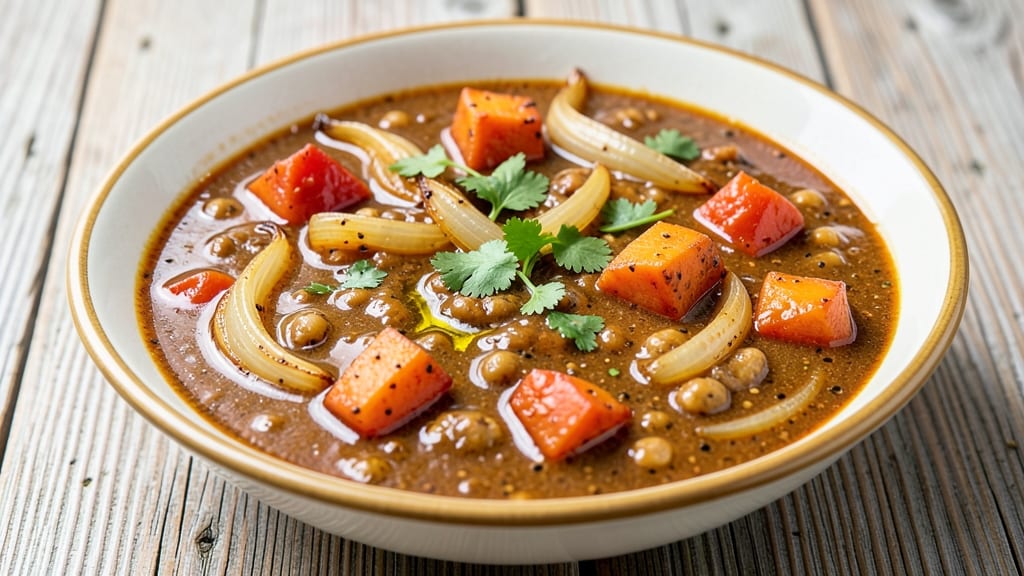
This sweet potato sambar recipe transforms a classic South Indian staple into a vibrant, vegan masterpiece that balances earthy sweet potatoes with tangy tamarind and aromatic lentils. The key lies in the tempering spices—mustard seeds, curry leaves, and dried chilies—that infuse the stew with layers of warmth and complexity.
I developed this version after years of perfecting the balance between sweet, sour, and spicy, ensuring every bite delivers restaurant-quality depth without compromising authenticity.
The beauty of sambar is its versatility—this recipe works as a hearty side for dosa or idli, a filling for wraps, or even a standalone meal with steamed rice.
The sweet potatoes add natural sweetness that cuts through the tangy tamarind and the earthy toor dal, while coconut milk lends a subtle richness.
What sets this apart is the foolproof tempering technique, where spices are bloomed in oil to release their full aroma before being poured into the simmering lentils.
By the time you serve this sambar, you’ll have a golden-brown, fragrant stew with perfectly tender lentils and sweet potatoes that soak up the spiced coconut broth. The tamarind adds a bright tang that balances the earthiness, while the final touch of asafoetida elevates the dish to professional-level depth.
This is sambar that feels both nostalgic and innovative—exactly what modern kitchens need.
Adjust the spice level to taste, thin with water if needed, or swap sweet potatoes for regular potatoes if unavailable. Pair it with fluffy rice or crispy dosa for the ultimate South Indian feast. Let’s make sambar that shines.
Ingredients for sweet potato sambar
Pantry staples meet South Indian tradition—earthy lentils, sweet potatoes, and aromatic spices come together for this vibrant vegan sambar.
| Ingredient | Amount | Notes |
|---|---|---|
| Toor Dal (Split Pigeon Peas) 🌾 | 1 ½ cups | Rinsed thoroughly before cooking |
| Sweet Potatoes 🍠 | 1 ½ lb | Peeled, cubed into 1-inch pieces |
| Tamarind Paste 🍋 | 2 tbsp | Adjust for desired tanginess |
| Coconut Milk 🥥 | 1 can | Full-fat, 13.5 oz can (not carton) |
| Tomatoes 🍅 | 2 medium | Chopped, or 1 cup canned diced |
| Yellow Onion 🧅 | 1 whole | Finely chopped, about 1 cup |
| Ginger 🌿 | 1 inch | Fresh, peeled, grated (about 1 tbsp) |
| Green Chilies 🌶️ | 2 whole | Slit lengthwise, or 1 tbsp dried |
| Curry Leaves 🌿 | ¼ cup | Fresh, lightly crushed |
| Mustard Seeds 🌱 | 1 tbsp | Whole, yellow variety preferred |
| Asafoetida (Hing) 🧂 | ¼ tsp | Essential for authentic flavor |
| Turmeric Powder 🌶️ | ½ tsp | Freshly ground preferred |
| Cumin Seeds 🌿 | 1 tsp | Toasted for deeper flavor |
| Salt 🧂 | 1 tsp | Adjust to taste |
| Coconut Oil 🫒 | ½ cup | For tempering, or vegetable oil |
The toor dal and sweet potatoes form the heart of this dish. Look for toor dal in Indian grocery stores—it's the traditional split pigeon pea that gives sambar its signature texture. Sweet potatoes should be firm, vibrant orange, and free from soft spots. Costco or Whole Foods often carry organic options. For tamarind, Indian markets have the best quality—avoid the block if it's too hard to extract juice. The coconut milk can be full-fat canned or carton, but full-fat delivers richer flavor. For tomatoes, vine-ripened ones have more natural sweetness to balance the tamarind's tang.
No tamarind paste? Lemon juice or lime juice works in a pinch, but you'll lose that complex, slightly sour depth. Fresh curry leaves are non-negotiable—they're the soul of sambar. Indian grocery stores sell them in bundles or frozen. Short on mustard seeds? Substitute with equal parts cumin seeds, though the flavor will differ slightly. The green chilies can be swapped for red chilies, but adjust the heat level accordingly. For a quicker version, canned diced tomatoes work fine—just drain well to avoid excess water. The ginger should be fresh; powdered lacks the bright punch.
Store cooked sambar in airtight containers for up to 5 days in the fridge, or freeze for 3 months. The flavors actually deepen over time, so it reheats beautifully. For best texture, reheat gently on low heat with a splash of water. This sambar pairs perfectly with steamed rice or crispy dosa. The coconut oil used for tempering can be reused once for its rich flavor—just store it in a sealed jar. Make a double batch; it disappears fast when served with rice.
Why You'll Love This Recipe
- No-Chop Night: The sweet potatoes just need a rough chop—no dice, no fuss. I toss them in whole or in thick chunks, and they soften perfectly while the dal simmers. Honestly, the only prep that matters is rinsing the toor dal and peeling the potatoes, which takes less time than scrolling through my phone.
- Tamarind-Coconut Magic: That tangy tamarind paste cuts through the natural sweetness of the potatoes, while the coconut milk adds this velvety richness. The tomatoes? They melt into the broth, giving it a depth that’s ridiculously satisfying—like a hug in a bowl, but with more umami.
- Leftovers That Beg: This sambar tastes even better the next day—yes, really. The flavors meld overnight, and reheating it with a splash of water brings it back to life. I’ve taken it to work for lunch three times this week, and no one’s complained (yet).
- Pantry Staple Power: Toor dal, sweet potatoes, and coconut milk? All things I already have on hand. No specialty ingredients, no last-minute grocery runs. Between us, I’ve made this twice in the past month because it’s the kind of dish that turns pantry basics into something special without breaking the bank.
Step-by-step instructions for sweet potato sambar
Transform simple ingredients into a rich, tangy stew with layers of spice and earthy sweetness.
Pressure Cook the Toor Dal and Sweet Potatoes
Rinse the 1.5 cups Toor Dal (Split Pigeon Peas) thoroughly under cold water until the water runs clear. This removes excess starch that can make the sambar gummy. Combine the dal with the 1.5 lb Sweet Potatoes (cubed into 1-inch pieces) in a pressure cooker and add 3 cups water. Bring to a rolling boil over medium-high heat until the pressure valve begins to whistle.
Close the lid and cook for 3 whistles (about 4-5 minutes after the first whistle) on medium heat. The dal should be soft and the sweet potatoes tender enough to pierce easily with a fork. Let the pressure release naturally for 5 minutes before opening the lid. This slow release prevents the dal from becoming mushy. Transfer the cooked mixture to a large bowl and mash lightly with a wooden spoon to break down the sweet potatoes slightly.
Prepare the Sambar Base
Heat the 0.5 cup Coconut Oil in a heavy-bottomed pot over medium heat. Add the 1 tbsp Mustard Seeds and let them splutter for 30 seconds until they begin to pop. Add the 1 tsp Cumin Seeds and toast for 1 minute until fragrant. Stir in the 0.25 cup Curry Leaves and 2 whole Green Chilies (slit lengthwise), cooking for 30 seconds until the leaves darken slightly and the chilies soften.
Add the finely chopped 1 whole Yellow Onion and sauté for 4-5 minutes until golden brown. Stir in the 1 inch Ginger (grated) and cook for 1 minute until the raw aroma disappears. Add the 2 medium Tomatoes (chopped) and cook for 3-4 minutes until they soften and turn mushy. Sprinkle in the 0.5 tsp Turmeric Powder and mix well to bloom the spices.
Build the Flavor Layers
Add the cooked dal-sweet potato mixture to the pot and stir gently to combine. Pour in the 2 tbsp Tamarind Paste and mix thoroughly until dissolved. Add the 1 can Coconut Milk (full-fat) and 1 tsp Salt, stirring well. Bring the entire mixture to a gentle simmer over medium-low heat. Let it cook uncovered for 15-20 minutes, stirring occasionally, until the sambar thickens slightly and the flavors meld together.
Taste and adjust the seasoning—add more salt if needed or a splash of water if the sambar is too thick. The sambar should have a balanced tang from the tamarind, a creamy texture from the coconut milk, and a deep earthiness from the sweet potatoes. Here's the thing—if it tastes too acidic, a pinch of sugar or a splash of water can help balance the flavors.
Temper with Asafoetida and Garnish
Once the sambar reaches a gentle simmer, reduce the heat to low and carefully add the 0.25 tsp Asafoetida (Hing). Stir gently—this spice releases an umami burst that deepens the flavor profile. Let the sambar simmer for another 5 minutes to allow the hing to infuse fully.
Garnish with a sprinkle of curry leaves and a few green chilies (finely chopped) for freshness. Serve hot with steamed rice or appam for the perfect balance of textures and flavors. The sambar should have a vibrant red-orange hue, a tangy-sweet taste, and a velvety consistency that coats the back of your throat with every spoonful.
Pro Tips For Making Sweet Potato Sambar
- SOAK THE DAL RIGHT: Sweet potatoes and toor dal play different games—soak the dal for at least 30 minutes (or overnight if you’re patient) to soften it properly, but don’t overdo it or it’ll turn mushy. I used to skip this, and my sambar always had a weird texture—like eating porridge with a side of regret.
- PEEL AND CUBE SMART: Cut sweet potatoes into 1-inch chunks (not thin slices) so they cook evenly without turning to mush. If you’re lazy like me, microwave them for 5 minutes first to soften the skin—peeling becomes a breeze, and they hold their shape better in the stew.
- CONTROL THE TAMARIND: Tamarind paste is sneaky—too much and your sambar tastes like a science experiment. Start with 1 tablespoon, adjust to taste, and remember: coconut milk sweetens things naturally, so don’t overcompensate. I learned this after making a batch so sour my family pretended to like it.
- SIMMER, DON’T BOIL: After adding tomatoes and spices, keep the heat low—a gentle simmer (not a rolling boil) lets the flavors meld without breaking the dal or making the sweet potatoes fall apart. I used to rush it, and my sambar always tasted half-cooked or glued together. Patience pays off here.
Best sauces and condiments for these flavors
Coconut Chutney
This creamy chutney elevates sambar by adding a velvety texture and subtle sweetness. Blend 1 cup fresh coconut (shredded), 2 tbsp roasted peanuts, 1 tbsp tamarind paste, ½ tsp cumin seeds, 1 green chili, and ¼ cup water until smooth.
Adjust salt to taste. Drizzle 1 tsp coconut oil on top for extra richness. Serve warm alongside sambar—it balances the tangy notes beautifully. 🥥
Spicy Tomato Onion Relish
Brighten your sambar with a quick-pickled relish that cuts through the coconut creaminess. Mix 1 cup diced tomatoes, ½ cup finely chopped red onion, 1 tbsp apple cider vinegar, ½ tsp sugar, ¼ tsp black pepper, and 1 tbsp chopped cilantro.
Let it sit for 10 minutes before serving. This adds a refreshing crunch and acidity that complements the sweet potatoes. 🌶️
Yogurt Raita
Cool down the spice with a tangy yogurt raita. Whisk 1 cup plain yogurt with 1 tbsp roasted cumin powder, 1 tbsp chopped mint, ½ tsp salt, and 1 tsp honey.
Chill for 30 minutes before serving. The probiotics in yogurt help balance the sambar’s heat, while the mint adds freshness. 🥛
Coconut Oil Drizzle
For a restaurant-worthy finish, drizzle 1 tbsp heated coconut oil over the sambar just before serving. The oil enhances the aroma and adds a luxurious sheen. I like to sprinkle ½ tsp black pepper and a pinch of asafoetida into the oil before drizzling.
This step is non-negotiable for that authentic, restaurant-quality touch. 💫
Pickled Garlic
Add a bold umami punch with quick-pickled garlic. Soak 4 cloves minced garlic in ¼ cup apple cider vinegar with ½ tsp sugar and ¼ tsp red pepper flakes for 15 minutes.
Stir a spoonful into the sambar at the end of cooking. The garlic’s sharpness contrasts perfectly with the sweet potatoes’ natural sweetness. 🧄
Nutrition facts
Frequently asked questions
Can I substitute regular potatoes for sweet potatoes in sambar?
Yes, you can! Regular potatoes work perfectly if sweet potatoes aren't available. Use 2 medium potatoes (about 1.5 lbs total) instead, and reduce the cooking time slightly since they'll soften faster. The flavor will be slightly less sweet but still delicious. For extra depth, add a pinch of cinnamon or cardamom during tempering.
How do I adjust the spice level in this sambar?
Start by controlling the green chilies—use 1 chili for mild, 2-3 for medium heat, or 4+ for spicy. For extra kick, add ½ tsp red chili powder at the end. To mellow the heat, reduce the asafoetida to ¼ tsp or add 1 tbsp grated coconut to balance. Always taste as you go!
Why did my sambar turn out too thick?
Thick sambar usually means too much dal or not enough liquid. Next time, add ½ cup water at the end if needed, or stir in 2 tbsp coconut milk to restore creaminess. For future batches, reduce the dal by ¼ cup or increase the tamarind paste slightly—it helps thin the consistency naturally.
Can I make this sambar without a pressure cooker?
Simmer the dal and sweet potatoes in a pot with 4 cups water for 25-30 minutes on medium heat until tender. Stir occasionally to prevent sticking. The texture will be slightly different but still delicious. For extra flavor, add 1 tsp turmeric to the cooking water to enhance the earthy notes.
How long can I store leftover sambar?
Store cooked sambar in an airtight container in the fridge for up to 5 days—it actually tastes better after resting! For longer storage, freeze for 3 months. Reheat gently on low heat with 2 tbsp water to restore texture. The flavors deepen over time, making it perfect for meal prep!