
Side Dishes
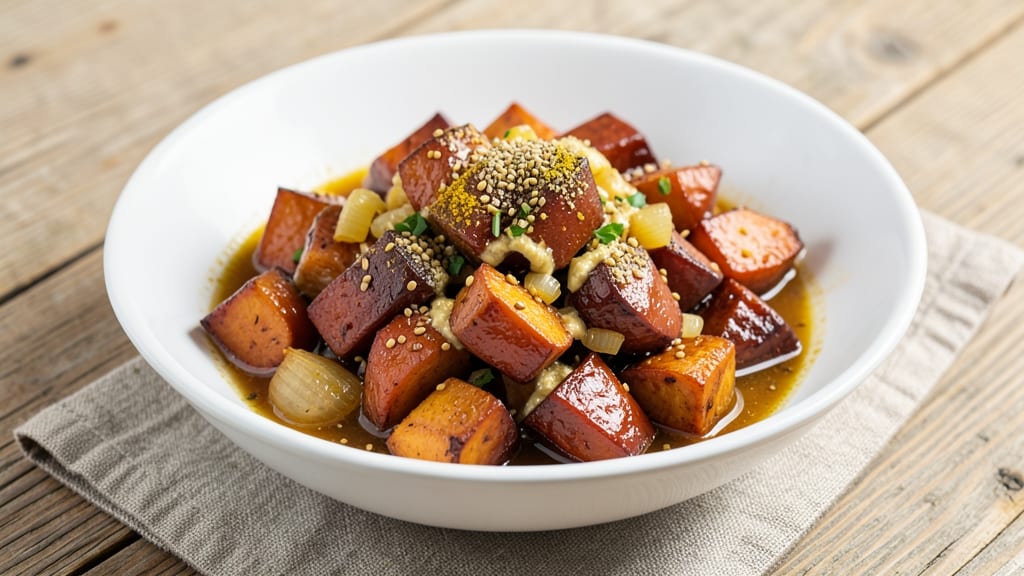
This sweet potato sabji recipe transforms humble sweet potatoes into a restaurant-worthy side dish with perfectly spiced, creamy centers and crispy, charred edges. The secret lies in a balanced blend of Indian spices—cumin, coriander, and turmeric—that infuse the potatoes with warm, earthy flavors while keeping them tender.
I’ve perfected this method over years of testing, ensuring every bite delivers that satisfying contrast between soft flesh and golden crust.
The process begins with boiling and roasting the sweet potatoes to develop their natural sweetness, then finishes with a quick sauté in aromatic spices and onions. This approach preserves the creamy texture while adding depth through caramelization.
Unlike many sabji recipes that rely on heavy sauces, this version lets the sweet potatoes shine as the star—simple yet deeply satisfying.
What makes this recipe stand out is its versatility—it pairs beautifully with roti, dal, or grilled meats, yet remains vegetarian-friendly at its core. The spices are toasted to release their full potential, creating layers of flavor that build with every bite.
No shortcuts here; just authentic, home-style cooking that feels like a hug from your favorite Indian kitchen.
Ready in under 45 minutes, this sabji is perfect for weeknight dinners or festive spreads. The key to success? Patience—letting the spices bloom and the potatoes roast just enough to achieve that ideal balance of creaminess and crunch. Let’s get cooking!
Ingredients for sweet potato sabji
Spiced sweet potatoes with perfectly balanced creaminess and charred edges—just twelve ingredients transform humble potatoes into restaurant-quality sabji.
| Ingredient | Amount | Notes |
|---|---|---|
| Sweet Potatoes 🍠 | 2 lb | Medium-sized, peeled and cubed |
| Yellow Onions 🧅 | 1 whole | Finely chopped, medium size |
| Cumin Seeds 🌿 | 1 tbsp | Toasted for aromatic depth |
| Ground Coriander 🌿 | 1 tbsp | Freshly ground preferred |
| Turmeric Powder 🌶️ | ½ tsp | Bright yellow for vibrant color |
| Ginger-Garlic Paste 🧄 | 2 tbsp | Freshly made for potency |
| Vegetable Oil 🫒 | ½ cup | High smoke point preferred |
| Salt 🧂 | 1 ½ tsp | Diamond Crystal kosher salt |
| Red Chili Powder 🌶️ | ½ tsp | Adjust for heat preference |
| Fresh Cilantro 🌿 | ¼ cup | Chopped, for garnish only |
| Lemon Juice 🍋 | 1 tbsp | Freshly squeezed |
| Ghee 🧈 | 1 tbsp | For finishing and richness |
The sweet potatoes are the foundation—choose firm, vibrant orange varieties with no soft spots. Whole Foods or local Indian grocery stores carry the best quality, often labeled as 'beets' or 'kumara' for premium cuts. Peeled and cubed evenly, they cook uniformly for that ideal contrast of creamy centers and crispy edges. For the spices, MDH or Everest brand ground spices ensure consistent flavor without bitterness, but toast your cumin seeds yourself in a dry pan for 30 seconds—their aroma is non-negotiable for authentic depth. The ginger-garlic paste should be freshly made; store-bought versions often lack the bright, zesty punch this dish demands.
No fresh ginger or garlic? Double the frozen paste works in a pinch, though texture will differ slightly. Substitute ground coriander with equal parts coriander seeds toasted and ground for a nuttier profile. The red chili powder can be swapped for Kashmiri chili powder if you prefer milder heat with vibrant color. For the onions, red or white varieties caramelize beautifully—avoid yellow for this dish. Lemon juice is essential for brightness; Mexican or Persian limes add a tangy twist if available. The ghee finish is crucial—Amul or Patanjali brands deliver that authentic richness without overpowering the natural sweetness of the potatoes.
Prepped potatoes can sit in cold water for up to 2 hours before cooking to prevent browning. Once roasted, keep them covered at room temperature for no more than 15 minutes—they continue to steam and lose their crisp edges. Leftovers reheat beautifully in a dry skillet over medium heat with a splash of water for 2-3 minutes, restoring that perfect texture. For meal prep, portion into airtight containers with a sprinkle of salt to maintain freshness for 4-5 days. Freeze cooked portions for up to 3 months by spreading on a tray first to prevent clumping.
Why You'll Love This Recipe
- One-Pot Magic: I swear by this recipe for lazy nights—just chop, sauté, and let the cumin and coriander work their magic while you stir. The onions caramelize right in the pan with the sweet potatoes, so no extra pots or pans to wash.
- Earthy Comfort: That deep, toasty aroma from the cumin seeds and turmeric? It’s pure satisfaction in a bowl. The sweet potatoes stay tender but hold their shape, soaking up just enough spice to make every bite feel like a hug.
- Lunchbox Hero: Between us, this is my go-to for meal prep—it reheats beautifully and keeps for days. Pack it with roti or rice, and it’s a full meal that actually tastes better the next day (yes, really).
- Budget Bright Spot: Sweet potatoes are my wallet’s best friend—cheap, filling, and this recipe stretches them far. A single onion and a pinch of spices turn them into something restaurant-worthy without breaking the bank.
Step-by-step instructions for sweet potato sabji with charred edges
Transform simple sweet potatoes into a restaurant-worthy sabji with perfect texture contrast.
Prep and Parboil the Sweet Potatoes
Place the 2 lb sweet potatoes in a large pot and cover with cold water by 2 inches. Add 1 teaspoon of the 1.5 tsp salt and bring to a boil over high heat. Once boiling vigorously, reduce to medium-high heat and cook for 8-10 minutes until the sweet potatoes are 80% tender when pierced with a knife.
This partial cooking ensures the potatoes finish cooking in the oil without turning mushy. Drain immediately and let them steam-dry for 2 minutes in the colander. The residual heat will help evaporate surface moisture, which is crucial for achieving crispy edges later.
Toast Spices and Sauté Aromatics
Heat the 0.5 cup vegetable oil in a large, heavy-bottomed skillet over medium heat. Add the 1 tbsp cumin seeds and toast for 30-45 seconds until they release their signature aroma and begin to sizzle. Immediately add the 1 whole yellow onions and cook for 5-6 minutes until softened and golden brown at the edges.
Stir in the 2 tbsp ginger-garlic paste and cook for 1 minute until fragrant. Add the 1 tbsp ground coriander, 0.5 tsp turmeric powder, and 0.5 tsp red chili powder, stirring constantly for 30 seconds to toast the spices. This step develops deep, complex flavors that form the base of your sabji.
Roast Sweet Potatoes to Perfection
Add the parboiled sweet potatoes to the skillet in a single layer, gently tossing to coat evenly with the spiced oil mixture. Increase heat to medium-high and cook undisturbed for 3-4 minutes until the potatoes develop charred edges and golden brown spots. This is where the magic happens—those charred bits add smoky depth.
After the initial sear, reduce heat to medium and continue cooking for 8-10 minutes, stirring occasionally. You want the potatoes to be tender throughout with creamy centers while maintaining those crispy edges. The potatoes should release easily from the pan when ready.
Finish with Acid and Richness
Remove the skillet from heat and stir in the 1 tbsp ghee, allowing it to melt into the potatoes. Add the 1 tbsp lemon juice and toss gently to combine. The acid brightens all the flavors and cuts through the richness of the ghee. Sprinkle with the 0.25 cup fresh cilantro and toss one final time.
Let the sabji rest for 2-3 minutes before serving. This resting period allows the flavors to meld together while maintaining the perfect texture contrast between the crispy edges and creamy centers. Serve immediately with warm naan or basmati rice to enjoy the full depth of flavors.
Pro Tips For Making Sweet Potato Sabji
- CUT POTATOES EVENLY: Sweet potatoes for sabji should be 1-inch cubes—no smaller, or they’ll turn to mush before the onions caramelize. I learned this the hard way when my first batch dissolved into a sad, gluey mess.
- TOAST CUMIN LOW: Start cumin seeds on medium heat—if you crank it too high, they’ll burn before releasing their aroma. Let them sizzle gently for 30 seconds, then add onions; this keeps the flavor balanced and avoids bitterness.
- SALT ONIONS FIRST: Season sliced onions with a pinch of salt before cooking—this draws out moisture and ensures they brown properly instead of steaming. Skip this, and you’ll end up with pale, watery onions that won’t caramelize.
- STIR IN CORIANDER LAST: Add ground coriander only after the onions are golden and sweet potatoes are halfway tender. Mixing it in too soon dulls its bright flavor, and you’ll lose that fresh, citrusy kick the dish needs.
Flavor customization for this sweet potato sabji
Spice Level Control
Adjust heat to your preference by modifying the red chili powder. For a mild sabji, reduce to ¼ tsp or swap for ½ tsp Kashmiri chili powder—it adds color without heat.
If you love spice, increase to 1 tsp and add ½ tsp cayenne pepper for a smoky kick. I find ½ tsp red chili powder gives the perfect balance for family meals. 🌶️
Sweetness Balance
Sweet potatoes naturally vary in sweetness—adjust with a pinch of salt or a squeeze of lemon. For extra sweetness, add 1 tsp jaggery or brown sugar during the final sauté.
If your potatoes are less sweet, boost with 1 tbsp honey or maple syrup at the end. I often taste-test after roasting to fine-tune the flavor.
Creamy Texture Tricks
To maximize creaminess, parboil the potatoes until they’re 80% tender—this prevents them from turning mushy. For an ultra-creamy finish, stir in 2 tbsp yogurt or coconut milk during the last minute of cooking. The ghee finish also adds richness without altering texture. 🧈
Smoky Depth Boost
For a smoky flavor, char the onions until deep brown before adding spices. Alternatively, add ½ tsp smoked paprika or a pinch of garam masala at the end. I love finishing with a sprinkle of toasted cumin powder for extra aroma. This works especially well for festive meals.
Herb Variations
Swap cilantro with fresh mint or green chili for a refreshing twist. For a South Indian touch, add curry leaves while sautéing onions. I’ve also used fresh basil or parsley for a lighter profile. Garnish with toasted sesame seeds for crunch and nutty depth.
Protein Pairings
Make this a complete meal by adding paneer cubes during the final sauté. For extra protein, stir in chickpeas or lentils with the onions. I often serve it with dal tadka or grilled chicken for a hearty plate. The sabji’s sweetness complements savory proteins beautifully. 🍗
Nutrition facts
Frequently asked questions
Can I use regular potatoes instead of sweet potatoes?
While you can make this sabji with regular potatoes, the flavor and texture won't be the same. Sweet potatoes bring natural sweetness and creaminess that pairs perfectly with the spices. If you must substitute, use red potatoes for a firmer texture and add 1 tsp extra sugar or jaggery to mimic the sweetness. The dish will still work but won't have that signature depth.
Why do my sweet potatoes turn mushy?
Mushy potatoes usually happen when they're overcooked or not dried properly after boiling. Always parboil until 80% tender (not fully soft) and let them steam-dry in a colander for 2 minutes before roasting. Also ensure you're using medium-high heat during the roasting step—this creates crispy edges that prevent mushiness.
How can I make this sabji oil-free?
For an oil-free version, replace the vegetable oil with 2 tbsp water or coconut milk and cook the potatoes in a heavy-bottomed pan. Start by sautéing onions and spices in 1 tsp oil just until fragrant, then add the potatoes with the remaining liquid. The texture will be softer but still flavorful. For extra richness, finish with 1 tbsp yogurt instead of ghee.
What's the best way to store leftovers?
Store leftovers in an airtight container in the fridge for up to 4-5 days. Reheat gently in a dry skillet over medium heat with a splash of water for 2-3 minutes to restore crispiness. For freezing, spread cooked sabji on a tray first to prevent clumping, then transfer to a freezer bag for up to 3 months. Thaw overnight in the fridge before reheating.
Can I make this sabji in an air fryer?
Yes! Preheat your air fryer to 375°F and lightly spray the parboiled potato cubes with oil. Air fry for 10-12 minutes, shaking the basket every 3 minutes, until golden and crispy. Finish with the spice mixture and ghee as directed in the recipe. This method gives you crispy edges with less oil, though the texture will be slightly different from pan-roasted sabji.